
Blog Posts
All Categories
Latest Posts
Super Admin
.2 months agoChoosing between eager execution and static graph architecture affects how deep learning teams build, debug, optimise, and deploy machine learning systems.

Super Admin
.2 months agoOrganisations deploying artificial intelligence need development teams that can build, train, evaluate, and maintain deep learning systems in production environments.

Featured Article

Latest Articles
PyTorch and TensorFlow Programming: Eager Execution vs Static Graph Architecture
Choosing between eager execution and static graph architecture affects how deep learning teams build, debug, optimise, and deploy machine learning systems.
PyTorch and TensorFlow Programming for Deep Learning Training Courses
Organisations deploying artificial intelligence need development teams that can build, train, evaluate, and maintain deep learning systems in production environments.

Stakeholder Mapping in Projects: Power, Interest and Influence Explained
A project manager spends an entire week preparing a detailed, beautifully formatted status report for a stakeholder who barely glances at it, while a quieter stakeholder down the hall, someone with the authority to pull funding at any moment, gets a two-line email update once a month.

Autocratic Leadership Explained: Definition, Traits and Real Workplace Examples
A kitchen in the middle of a dinner rush. The head chef doesn't hold a vote on plating, doesn't ask for input on timing, and doesn't wait for consensus when an order comes back wrong.

PRINCE2 Explained: Principles, Themes and Processes for Beginners
Ask five people what PRINCE2 actually is, and you'll likely get five different answers. Some will call it "a certification." Others will describe it as "a methodology like Agile." A few will simply say, "It's the one with all the diagrams." The confusion is understandable.

Project Change Control: How Scope Creep Actually Starts and Spreads
It never arrives as one dramatic moment. Nobody stands up in a meeting and announces, "Let's abandon the plan." Instead, it starts with a small, reasonable-sounding request.

What Goes in a Project Charter? Sections, Purpose and Approval Explained
Picture a project that kicks off with a full team, a healthy budget, and a sponsor who is genuinely excited. Six weeks in, the mood has changed. The client is asking for features nobody discussed.

Preparing Your Organisation for Modern and Post-Quantum Cryptography Before the Migration Deadline Arrives
What is this course and what workplace problem does it solve?. This course equips IT and security teams with practical skills to migrate cryptographic systems from classical to quantum-resistant standards before regulatory and vendor deadlines force reactive, high-risk transitions.

Modern and Post-Quantum Cryptography: Why Harvest-Now-Decrypt-Later Changes Key Lifetimes
Cryptographic infrastructure was built on an assumption that no longer holds: that data encrypted today stays unreadable for decades. Quantum computing breaks that assumption, and the gap between "encrypted" and "protected" is now measured in years, not certainty.

Modern and Post-Quantum Cryptography Implementation Training Courses
What Is Modern and Post-Quantum Cryptography Implementation Training?. Modern and post-quantum cryptography implementation training teaches technical teams how to inventory existing cryptographic systems, adopt NIST-standardised algorithms such as Kyber and Dilithium, and migrate infrastructure before quantum computers break current encryption methods.

Design Analog Electronics and RF Circuits That Perform Reliably at High Frequencies
What is this course and what workplace problem does it solve?. This course closes the gap between theoretical circuit design and reliable high-frequency performance, giving engineers practical methods for impedance matching, biasing, and noise control before deployment.

Analog Electronics and RF Circuits: Why Components Behave Differently Above 100 MHz
Analog electronics and RF circuits do not scale the same way as digital systems. Below 100 MHz, a resistor behaves like a resistor and a wire behaves like a wire.

Analog Electronics and RF Circuits Design Training Courses
What Is Analogue Electronics and RF Circuits Training for Corporate Teams?. Analogue electronics and RF circuits training builds the technical capability to design, analyse, and troubleshoot circuits that operate on continuous signals and high-frequency transmission, closing skill gaps that slow product development in electronics, telecommunications, and defence sectors.

Turn VHDL/Verilog and FPGA Devices Theory Into Working Silicon
What problem does this course solve for digital design professionals?. This course addresses the gap between knowing hardware description languages and producing verified FPGA implementations by developing practical capability in RTL design, synthesis, simulation, timing analysis, FPGA architecture, and implementation workflows for professional digital engineering teams.

VHDL/Verilog and FPGA Devices: How Hardware Description Languages Map to Silicon
VHDL and Verilog provide a structured way to describe digital hardware, while FPGA devices turn those descriptions into configurable physical logic. The path from code to silicon passes through register transfer level design, simulation, synthesis, timing analysis, placement, routing, and device programming.

VHDL/Verilog and FPGA Devices for Digital Design Training Courses
How does VHDL, Verilog and FPGA training address digital design skill gaps?. It gives engineering teams a structured process for converting digital specifications into tested FPGA designs while improving technical consistency, development efficiency, and design quality.

What Happens in the First Hour of a Cyber Security Incident
This What Happens in the First Hour of a Cyber Security Incident article from the British Academy for Training and Development. It is published by the British Academy for Training and Development for readers interested in this field.

Learn IT and Programming Skills the Way Corporate Teams Actually Apply Them
Most organisations discover their technical skills gap at the worst possible moment. A system upgrade stalls. A software rollout runs over budget. A department relies on one person who understands the codebase, and that person leaves.

Radio Jamming Techniques Explained: Barrage, Spot and Sweep Signatures
Radio jamming disrupts communication by injecting interference into a target frequency or frequency range. Understanding how different jamming signatures behave is central to spectrum defence, electronic warfare readiness, and workforce capability in sectors that depend on secure radio links.

Radio Jamming Techniques Detection and Countermeasures Training Courses
Radio frequency interference disrupts communication systems across defence, aviation, maritime, and industrial sectors. Organisations operating critical infrastructure need staff who can identify jamming signatures, trace interference sources, and apply countermeasures before operations are compromised.

Why Engineers Choose The British Academy for Training and Development to Master Software Defined Radio
Software-defined radio is now central to modern communications, defence, aerospace and telecommunications engineering. Employers expect engineers to understand IQ sampling, digital down-conversion, sample rate selection and baseband processing without months of unsupervised trial and error.

Software Defined Radio Platforms Compared: RTL-SDR, HackRF and USRP for Practical Applications
Selecting a software-defined radio platform determines what an engineering team can build, test and deploy. RTL-SDR, HackRF and USRP occupy different price points, frequency ranges and processing capabilities.
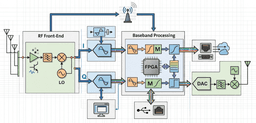
Software Defined Radio: IQ Sampling, Baseband Processing and Front-End Architecture
Software-defined radio (SDR) shifts signal processing from fixed hardware into software, and this shift now defines hiring and training decisions across telecommunications, defence, aerospace and IoT sectors.

How British Academy for Training and Development's Training Management and Coordination Course Drives Learning Success
What is the Training of Trainers and Education Management course, and what problem does it solve?. The Training of Trainers and Education Management course develops the ability to design, deliver, facilitate, assess, and improve workplace learning.