
Blog Posts
All Categories
Latest Posts
Super Admin
.2 months agoWhat Is Antenna Design and Measurement Training?. Antenna design and measurement training teaches engineers and technical teams to model, build, and test antennas using radiation pattern analysis, gain calculations, and impedance matching.

Super Admin
.2 months agoWhat is the course and what problem does it solve?. Employers hire senior network engineers who can diagnose routing failures, secure BGP peering, and manage IPv6 migration without supervision, not those who memorise definitions.

Featured Article

Latest Articles
Antenna Design and Measurement Techniques Training Courses
What Is Antenna Design and Measurement Training?. Antenna design and measurement training teaches engineers and technical teams to model, build, and test antennas using radiation pattern analysis, gain calculations, and impedance matching.
Command IP Protocols and Technologies with the Depth Senior Network Engineers Are Hired For
What is the course and what problem does it solve?. Employers hire senior network engineers who can diagnose routing failures, secure BGP peering, and manage IPv6 migration without supervision, not those who memorise definitions.
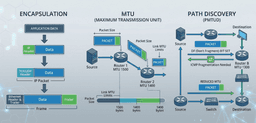
IP Protocols and Technologies: Encapsulation, MTU and Path Discovery Explained
Every packet that moves across a corporate network passes through a sequence of technical decisions most employees never see. Encapsulation wraps data in headers.

IP Protocols and Technologies for Network Engineers Training Courses
What Are IP Protocols and Technologies in a Corporate Network Context?. IP protocols and technologies are the rule sets that govern how data moves across corporate networks, connecting devices, applications, and locations through addressing, routing, and packet delivery standards such as TCP/IP, BGP, OSPF, and IPv6.

Agile vs Scrum: What the Real Difference Is and When Each Applies
Walk into almost any product or engineering team today and ask what methodology they follow. Nine times out of ten, the answer is some version of "we're Agile, we do Scrum." Said in one breath, as if the two words were simply synonyms for the same modern way of working.

Agile Project Management: Advantages and Disadvantages, an Honest Assessment
Every few years, a management philosophy arrives with enough momentum to feel less like a choice and more like an inevitability. Agile has been that philosophy for well over a decade now, and somewhere along the way, questioning it stopped feeling like a legitimate opinion and started feeling like a confession of incompetence.

Agile Certifications Ranked: Which One Actually Moves Your Salary
Somewhere on LinkedIn right now, someone is adding their fourth Agile certification to their profile, convinced that the next acronym will finally be the one that gets them noticed.

Step Up to Linux Admin Training That Goes Beyond Command Line Basics
Organisations running Linux infrastructure at scale cannot rely on administrators who only know basic commands. Production environments demand people who understand permissions architecture, service management, package dependencies, and system tuning under load.

Advanced Linux Admin: systemd Units, Namespaces and Kernel Tuning Explained
Linux administration splits sharply once a team moves past basic command-line tasks. Junior admins manage files, users and packages. Advanced admins manage service lifecycles, process isolation and kernel behaviour.

Advanced Linux Admin Training Courses
What Is Advanced Linux Admin Training and Why Does It Matter for Business Operations?. Advanced Linux admin training teaches IT teams to manage servers, automate repetitive tasks, secure infrastructure, and resolve system failures at scale, cutting average incident resolution time by 40% and reducing unplanned downtime across data centres, cloud environments, and enterprise networks.

Model Electromagnetic Propagation Accurately and Stop Guessing Your Link Budgets
What is the course and what problem does it solve?. This course addresses a specific technical gap: engineers and technicians who calculate link budgets from rule-of-thumb assumptions rather than validated propagation models, producing unreliable network performance predictions.

Electromagnetic Propagation: Fresnel Zones, Diffraction and Terrain Obstruction Explained
Electromagnetic propagation describes how electromagnetic waves travel through space and interact with terrain, buildings, atmospheric conditions, vegetation, and other physical environments.

Electromagnetic Propagation Theory and Modelling Training Courses
Electromagnetic propagation theory explains how electromagnetic waves travel through free space, air, buildings, terrain, and other physical environments.

Master RF Circuit and System Design with The British Academy for Training and Development in London and Dubai
RF engineering teams need more than theoretical circuit knowledge because practical systems depend on impedance matching, signal transfer, gain, noise, reflection, frequency conversion, and reliable integration.

RF Circuit and System Design: Cascaded Noise Figure and Gain Budgeting Explained
RF system performance depends on how individual circuit stages affect gain, noise, and signal quality across the complete signal chain. Cascaded noise figure and gain budgeting provide engineers with a structured method for evaluating these interactions before component selection and system integration.

RF Circuit and System Design Fundamentals Training Courses
RF circuit and system design is the structured process of designing, analysing, testing, and optimising radio-frequency electronic systems. In corporate environments, this capability supports wireless communications, telecommunications, aerospace, defence, automotive electronics, satellite systems, medical devices, and industrial connectivity.

Advanced Project Management Skills That Separate Senior Professionals
Two project managers can hold the exact same certification, use the exact same software, and follow the exact same methodology, yet one consistently gets picked to run the organization's most complicated, highest-visibility initiatives while the other stays on straightforward, well-defined projects indefinitely.

Optimise Wireless Communication Systems That Hold Performance Under Real Network Load
Wireless communication systems that pass laboratory testing often lose capacity once they carry live subscriber traffic. Bit error rate rises as multipath fading enters the channel.

Wireless Communication Systems: What Actually Caps Throughput in Live Deployments
What Limits Throughput in Wireless Communication Systems?. Throughput in wireless communication systems is capped by bit error rate, fading channel behaviour, spectral efficiency limits, and interference under real network load, not by the theoretical bandwidth stated in equipment specifications.

Wireless Communication Systems Design and Performance Analysis Training Courses
What Is Wireless Communication Systems Design and Performance Analysis Training?. Wireless communication systems training teaches engineers and technical teams to design, model, and evaluate radio-based networks using metrics such as bit error rate, spectral efficiency, and throughput under real signal conditions across 4G, 5G, Wi-Fi, and satellite deployments.

Start Your RF Career with Essential Wireless Communication Systems Taught by Practising Engineers
Wireless communication systems sit behind every modern network, from cellular infrastructure to enterprise connectivity. Engineers and technical teams are expected to understand modulation, multiplexing, and channel coding at a working level, not just in theory.

Essential Wireless Communication Systems: Modulation, Multiplexing and Channel Coding Explained
Wireless communication systems move data through open air using controlled radio waves. Every signal faces noise, interference and bandwidth limits. Engineers who understand modulation, multiplexing and channel coding solve these constraints with precision rather than guesswork.

Essential Wireless Communication Systems Concepts and Standards Training Courses
Wireless communication systems form the backbone of modern connectivity across telecommunications, manufacturing, healthcare, finance, and logistics. Organisations depend on engineers, network specialists, and technical teams who understand modulation schemes, multiple access methods, channel coding, and cellular standards to design and maintain reliable networks.

Go From Notebook to Production with PyTorch and TensorFlow Programming at The British Academy for Training and Development
What does the PyTorch and TensorFlow programming course solve?. The course addresses the gap between experimental deep learning work and production-ready implementation by building practical capability in tensors, model construction, autograd, backpropagation, GPU acceleration, neural network layers, and deployment-oriented programming workflows for professional environments.