
Blog Posts
All Categories
Latest Posts
Super Admin
.1 month agoMicrowave circuit failures rarely originate in the simulator. They originate in the gap between a modelled result and a physical board: a mismatched trace, an under-specified via, a technician who cannot read a Smith chart under time pressure.

Super Admin
.1 month agoAt microwave frequencies, wavelength stops being an abstract physics term and becomes a design constraint that governs every trace, connector, and component on a board.

Featured Article
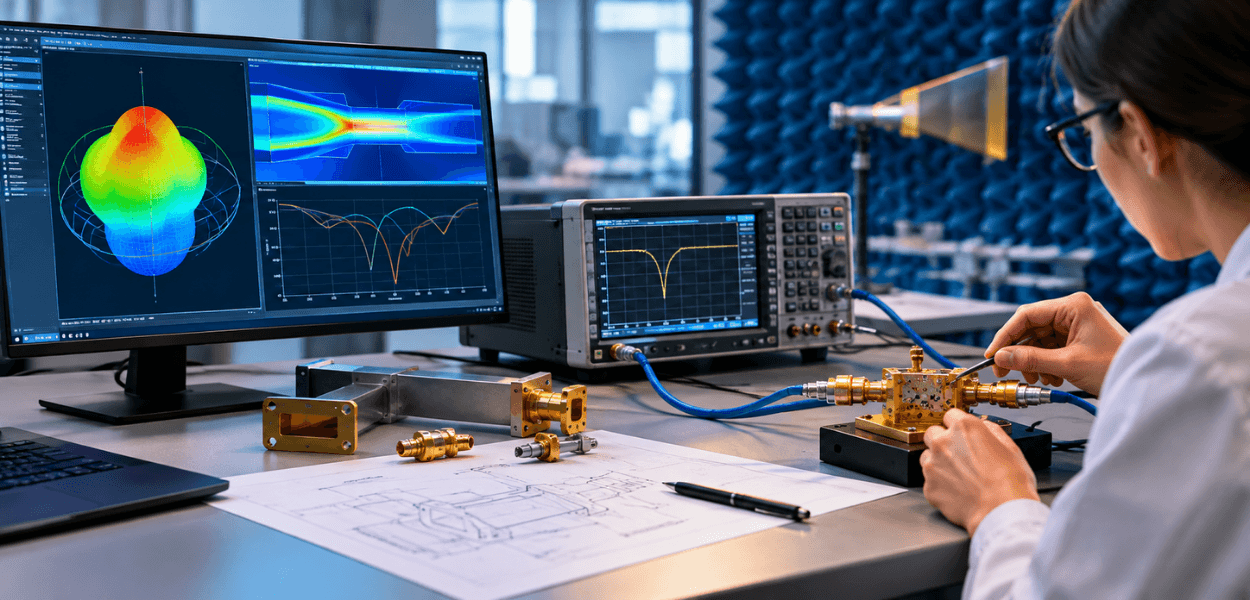
Solve Microwave Engineering and Transmission Problems That Simulation Alone Will Not Fix
Microwave circuit failures rarely originate in the simulator. They originate in the gap between a modelled result and a physical board: a mismatched trace, an under-specified via, a technician who cannot read a Smith chart under time pressure.
Latest Articles
Solve Microwave Engineering and Transmission Problems That Simulation Alone Will Not Fix
Microwave circuit failures rarely originate in the simulator. They originate in the gap between a modelled result and a physical board: a mismatched trace, an under-specified via, a technician who cannot read a Smith chart under time pressure.
Microwave Engineering and Transmission Line Design: Why Wavelength Dictates Circuit Behaviour
At microwave frequencies, wavelength stops being an abstract physics term and becomes a design constraint that governs every trace, connector, and component on a board.

Microwave Engineering and Transmission Line Design Training Courses
What Is Microwave Engineering and Transmission Line Design in a Corporate Training Context?. Microwave engineering and transmission line design is the discipline of designing, analysing, and testing circuits and systems that operate at frequencies above 300 MHz, where wavelength becomes comparable to component size and standard circuit theory breaks down.

Accelerate Your Modelling Work with MATLAB and Simulink at British Academy for Training and Development
What is the course and what problem does it solve?. Engineers and analysts often lose weeks translating mathematical models into working simulations, delaying product validation and increasing project risk.
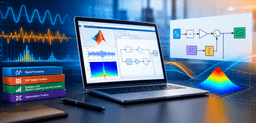
MATLAB and Simulink for Signal Processing: Toolboxes, Solvers and Block Libraries
Signal processing teams face a specific problem: raw mathematical models rarely translate cleanly into deployable systems. Engineers write algorithms in isolation, then spend weeks reconciling them with hardware constraints, real-time requirements, and production code standards.

MATLAB and Simulink for Signal Processing Training Courses
What Is MATLAB and Simulink Training for Signal Processing?. MATLAB and Simulink training for signal processing teaches employees to model, simulate, and analyse signals using model-based design and block diagrams.

Build Embedded Systems and Microcontroller Skills That Employers Verify at Interview
What is this course and what workplace problem does it solve?. This course closes the gap between theoretical electronics knowledge and interview-ready embedded systems competence, giving engineers verifiable skills in ARM Cortex programming, GPIO configuration, and firmware development that hiring panels can test directly.
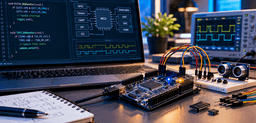
Embedded Systems and Microcontroller Programming: Interrupts, Timers and Peripheral Drivers
Embedded systems engineers spend most of their working hours managing three mechanisms: interrupts, timers and peripheral drivers. These three elements determine whether a device responds correctly under real-world conditions or fails when timing margins narrow.

Embedded Systems and Microcontroller Programming Training Courses
What Is Embedded Systems and Microcontroller Programming Training in a Corporate Context?. Embedded systems and microcontroller programming training builds the technical capability to design, code and troubleshoot hardware-integrated software used in products across industries like automotive, medical devices and industrial automation.

Take Charge of Spectrum Management with Regulatory Knowledge Regulators Themselves Expect
What does this course solve for spectrum management professionals?. Spectrum management requires professionals who can connect regulatory requirements with frequency allocation, licensing, monitoring, measurement, interference investigation, and technical decision-making across real workplace environments.

Spectrum Management: ITU Radio Regulations and National Frequency Allocation Explained
Radio frequencies do not stop at a border. A broadcast signal transmitted in one country can degrade a mobile network in the next if nobody coordinates who transmits where.
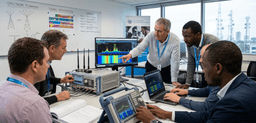
Spectrum Management and Radio Monitoring Training Courses
What Is Spectrum Management and Radio Monitoring Training?. Spectrum management is the structured control of radio frequency use within an organisation, covering frequency allocation, licensing, interference hunting, and direction finding.
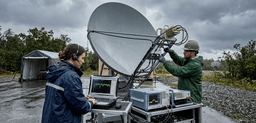
Engineer Satellite Communication Systems That Survive Rain Fade and Link Margin Pressure
Satellite communication systems fail in the field when link budgets are calculated on paper and never stress-tested against weather, distance and equipment tolerance.

Satellite Communication Systems: Orbits, Transponders and Footprint Coverage Explained
Satellite communication systems carry voice, data and broadcast traffic across distances that terrestrial infrastructure cannot reach economically. Engineers responsible for designing, operating or upgrading these systems need a working command of three interdependent variables: orbit selection, transponder behaviour and footprint coverage.
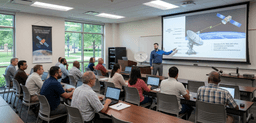
Satellite Communication Systems and Ground Stations Training Courses
What Is Satellite Communication Systems and Ground Stations Training, and Why Do Organisations Need It?. Satellite communication systems and ground stations training teaches engineers, technicians, and IT staff how satellites transmit data, how ground stations receive it, and how organisations maintain reliable links for broadcasting, navigation, defence, and telecommunications operations.
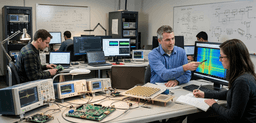
Advance Your Radar Systems and Signal Processing Expertise with Engineers Who Have Built Them
Radar professionals need more than theoretical knowledge of detection, transmission, and signal behaviour. They need structured technical capability to analyse system architecture, evaluate signal quality, understand range and velocity measurements, and identify processing limitations.

Radar Systems: Range Resolution, Doppler Shift and Radar Cross Section Explained
Radar performance depends on how accurately a system detects objects, separates targets, identifies movement, and maintains reliable measurements in complex environments.
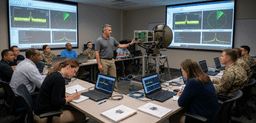
Radar Systems and Signal Processing Training Courses
Radar systems and signal processing training courses develop the technical capability required to understand, operate, analyse, and improve radar-based systems in professional environments.

What Is Agile? The Methodology, Core Principles and Values Explained
The word "Agile" has drifted so far from its original meaning that it's worth asking, plainly, what a team means when they say it out loud. For some, it means daily standups and two-week sprints.

Apply Digital Signal Processing to Real Receiver Problems at The British Academy for Training and Development
What Is This Course and What Problem Does It Solve?. This course teaches participants to apply digital signal processing techniques to real communication receiver problems.

Digital Signal Processing: Sampling, Aliasing and Quantisation in Communication Receivers
Digital signal processing in communication receivers depends on converting continuous analogue signals into digital representations without losing information that the receiver needs for detection, demodulation, filtering and analysis.

Digital Signal Processing for Communication Systems Training Courses
Digital Signal Processing for Communication Systems Training Courses develop the technical capability required to process, analyse, filter, transform, and interpret digital signals in modern communication environments.
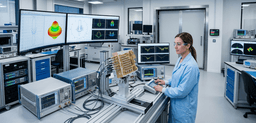
Get Antenna Design and Measurement Right Before It Costs You a Chamber Booking
What problem does Antenna Design and Measurement training solve?. A design that performs well in simulation software does not always perform well on a test bench.
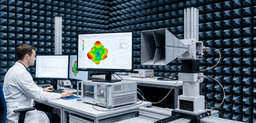
Antenna Design and Measurement: Gain, Directivity and Radiation Pattern Fundamentals
Antenna performance is confirmed in two places: the simulation software and the anechoic chamber. The two do not always agree. A design that models cleanly in CST or HFSS can still fail return loss targets once it sits on a real substrate, inside a real enclosure, fed by a real connector.