
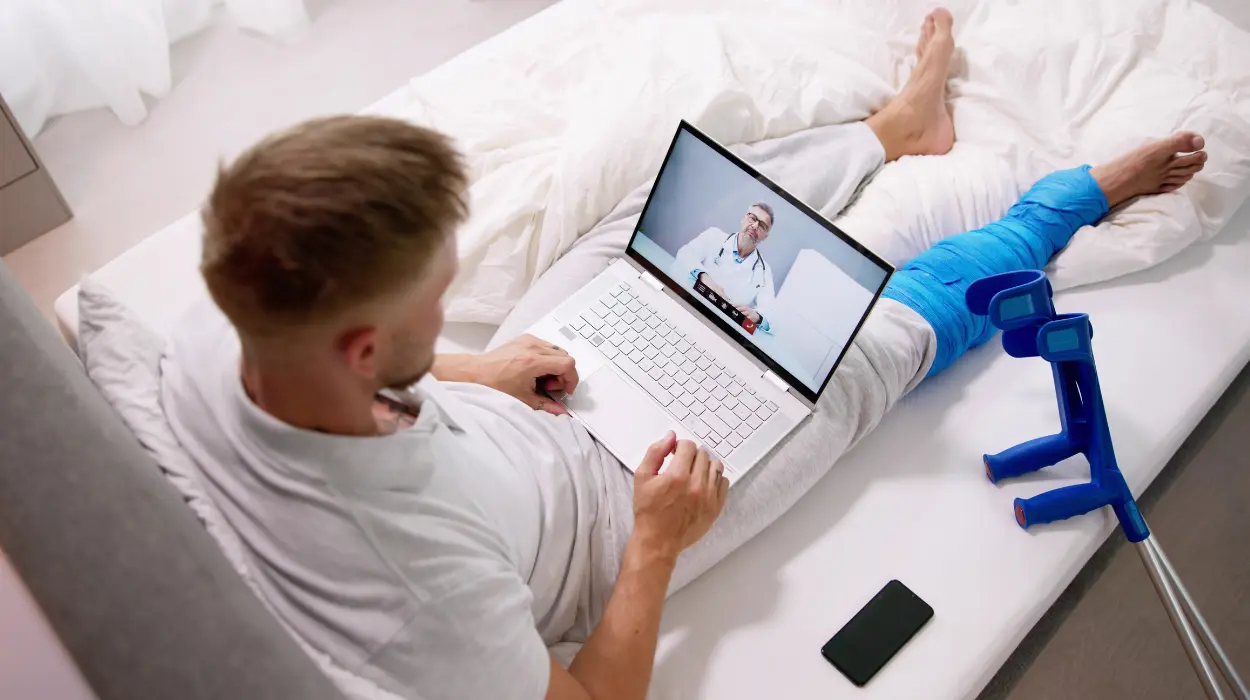
Healthcare is taking advantage of all the progressive advances made in technology. For instance, telemedicine is among the newest applications that link the patients to distant doctors seeking health care services. Moreover, attached to telemedicine are some associations that set up the policies to ensure a safe and secure effective performance of distance-based clinical technology.
Telemedicine is the use of technology for offering healthcare services from one place to another, where a patient can consult a doctor via video calls, mobile apps, or many forms of digital tools. Providing care, especially for those who live in remote regions, makes access much easier; moreover, it increases efficiency in the healthcare system.
Telemedicine has impacted healthcare in a major way; access has been tremendously improved, especially considering remote areas. Virtual consultations are available and can minimize costs associated with travel, while also offering real-time monitoring of health. It is also practical in both telemedicine and healthcare where generally reduced waiting periods could allow for several patients to be managed proactively under the treatment of chronic conditions. It has changed the healthcare scene, making it more flexible and accessible to patient-centered care. Enroll in the Training Course in Healthcare Information Management and advance your skills for a successful career in healthcare data management.
Five main types of telemedicine services are:
It involves a person or a patient interacting with the healthcare provider through live video or audio connection. It is mainly utilised for primacy care services, follow up visits, and specialist visits.
Provision of Transmission for Medical Data (reports, images, etc.) that would enable review of such medical data by the healthcare provider at a later time. Commonly used in radiology, dermatology, and pathology.
Employs devices to gather and forward health data e.g., heart rates and glucose levels, to service providers. Most appropriate for the management of chronic diseases like diabetes or hypertension.
Counseling through platforms over the Internet quality in psychology and therapy services related to behavioral disorders, anxiety, depression, and the rest.
This technology utilises mobile applications and portable devices to trace health indicators and give much education on healthcare. Mostly utilised for fitness monitoring, this is very useful for medication reminders and general health care management.
The following advantages of telemedicine are:
Patients from rural and hard-to-reach places access healthcare professionals using connecting.
It breaks the geographical barriers associated with healthcare services.
These are cost-effective, transport, and facility-based care.
Optimise healthcare providers' resource use.
Enables patients to visit their doctor at home.
Reduces the time spent traveling for in-person visits.
Beneficial to people with limited mobility, a busy schedule, or chronic illnesses.
Simplifies the delivery of healthcare and enhances the wait time.
In the beginning, early intervention facilitates detection and treatment before health problems occur through remote monitoring of health parameters.
This will prevent complications and increase readmission rates.
Motivates patients to stay vigilant about their health and do participative health management.
Five challenges in the growth of telehealth are:
Each different state and country adopt a dissimilar set of rules on telemedicine, which usually leads to confusion and discrepancies in service provision. Licensure requirements established among healthcare providers may block the cross realm establishment of telehealth.
Underutilisation of telehealth services can also be furthered because many insurers and other government programs do not include those services in their reimbursement schedules.
Patients with reduced digital literacy and poor access to technology are likely to find it difficult to experience telemedicine fully. The digital divide adds to all the existing barriers in healthcare disparity and will deny access to telehealth equally.
Access to some poor-quality internet connectivity and low-cost devices limit telehealth services, especially most often in rural or underserved areas. Reliability and credibility of platforms disallowed would, therefore, lead to impaired quality and safety in virtual consultation.
The degree of confidentiality that telehealth provides in relation to patient data raises concerns of cybersecurity and breach. Compliance with regulations such as the Health Insurance Portability and Accountability Act (HIPAA) is mandatory to ensure average patient trustworthiness.
Following four opportunities in the growth of telehealth are:
Continuous progress in telehealth brings efficiencies into healthcare, reduces the hours patients spend waiting in line, and improves the entire patient experience.
Proactive management of chronic conditions will prevent complications later and, hence, hospitalisations.
Specialty care and routine visits can also open access to health care services for patients in rural and underserved areas with telehealth. Using simple, cost-effective devices can facilitate the extension of telemedicine to wider segments of the population.
These latest technologies, like artificial intelligence or machine learning, or even wearable devices, help to advance telehealth services and original monitoring. Such powerful and secure tools could incorporate telemedicine in a much more integrated way.
The common goal of linking policy, practice, and information technology is achieved best through the joining of heads and potential from the branches of the health sector: the policymakers, the service providers, and the technology industry. An example is partnerships between telemedicine providers and health care systems for easier and better access and use of services by patients.
Telemedicine has transformed healthcare into more popular, more accessible, efficient, and further flexible at the same time it might be able to eliminate geographical hurdles of access and improve the availability of care in underserved areas. Real time consultation and remote monitoring in the management of chronic conditions and prevention of complications would continue to be primary goals and moving forward for telemedicine as it keeps changing the face of patient centered care in future to come. The British Academy for Training and Development offers various healthcare courses, including Healthcare Information Management, to help you stay ahead in this evolving field.