
Offshore oil and gas operations are one of the energy sector's most complex and high-risk ventures. They play a vital role in fulfilling the world's energy needs but demand careful planning, sophisticated technology, and high safety and environmental compliance. Learn about the essentials of offshore oil and gas operations by joining the Training program in Advanced Management in the Oil and Gas Industry offered by the British Academy for Training and Development.
It is now known that offshore oil and gas extraction started late in the 19th century, but until the mid-20th century technology improved and started drilling in deeper water. An offshore oil well was drilled first off the coast of California in 1896. With technological innovations that appeared in the 1940s and 1950s, there have been some significant developments in offshore platforms that now have made it possible to work in waters considered inaccessible even earlier.
The operations are highly complex when a boom in offshore drilling technology sets in. Offshore operators are nowadays operating from ultra-deep waters going up to 10,000-foot depths with more sophisticated floating plants and subsea systems put into place. It has revolutionized the offshore into sourcing global energy.
Exploration is the first stage of offshore oil and gas operations. It uses advanced geophysical techniques, such as seismic surveys, to detect potential hydrocarbon reserves beneath the ocean floor. Once an area of interest has been determined, exploratory drilling is conducted to confirm the presence of oil or gas.
Offshore environments require special rigs, such as jack-up rigs for shallow waters, and semi-submersible or drillships for deep and ultra-deep waters. Advanced technology is applied in drilling rigs in order to withstand the hostile conditions of the offshore environment, including high-pressure and high-temperature reservoirs.
If exploration is successful, production facilities are installed to extract and process hydrocarbons. The types of offshore production platforms include fixed platforms, floating production storage and offloading units (FPSOs), and subsea production systems.
Offshore facilities are designed for extreme conditions like hurricanes, heavy waves, and saltwater corrosion. They house necessary equipment for the separation of oil, gas, and water and compressing the gas to be transported.
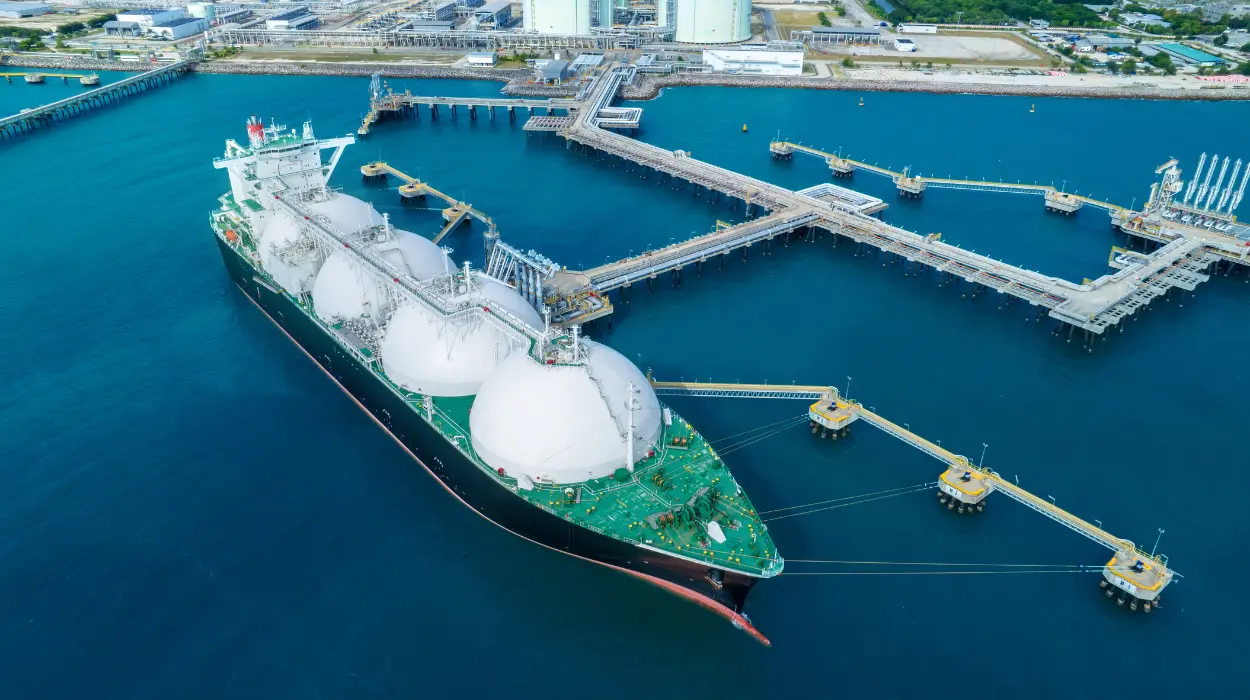
Hydrocarbons can be extracted and transported directly to facilities onshore either via a pipeline or in ships. Pipelines are better for longer ranges of oil or gas transporting, although laid on seabed generally. Laying subsea pipelines is a somewhat technical operation.
Hydrocarbons are stored and offloaded on FPSOs if pipeline transportation is not possible. These types of vessels can process, store, and transfer oil and gas to shuttle tankers. Therefore, operations can be conducted at very remote offshore locations.
Offshore oil and gas exploration activities are risky by nature. The marine environment is harsh as well as unpredictable. Environmental effects of operational failure-the case in point is that of the Deepwater Horizon tragedy in 2010-spills and leaks-are catastrophic.
The above risks are mitigated because operators take measures to tighten up on safety protocols, and deploy the latest monitoring systems as well as contingency plans to counter the risks. Likewise, governments and international authorities enforce stringent environmental regulations governing resource extraction.
Offshore operations require the latest in technology and know-how. Equipment is required to withstand extremely high pressures, extreme temperatures, and corrosive salt water, with reliability in use for a long period. Subsea systems, autonomous underwater vehicles, and remotely operated vehicles become important elements in maintenance and monitoring. Offshore platforms should be self-sufficient with power generation facilities, desalination of water, and waste management. All these systems should be well-coordinated and engineered.
Offshore activities are capital-intensive; costs are prohibitively dramatic for deep and ultra-deepwater. Moreover, oil and gas prices are unpredictable and exert considerable influence on uncertainty; they can never be too viable, economically speaking. As the upfront cost remains at high points, it goes alongside potential long-term revenue opportunities with very innovative financing or collaboration efforts.
Digital technologies transform offshore oil and gas operations. Real-time analytics of data, predictive maintenance, and digital twin enable remote operations to monitor processes and optimize it. This automation of a hazardous operation minimizes the human population in those dangerous areas of operation and further reduces risk and efficiency.
Most of the operators that venture offshore look into exploring synergies in renewable energy. Some combine both wind and solar power from the same platform in efforts to reduce carbon footprints. There are wind farms, which are providing complementary projects, mostly drawing on the infrastructure and competencies supporting oil and gas activity.
Offshore production is enhanced by the two modern recovery techniques, which include EOR and hydraulic fracturing. These two boost the chances of the offshore operators to recover extra hydrocarbons from a specific reservoir, hence offering a life extension for the current operating offshore fields.
Offshore oil and gas fields make up a major proportion of hydrocarbon production around the world. Super-giant fields in the North Sea, Gulf of Mexico, and offshore Brazil comprise a large share of satisfying the world's energy requirements.
The offshore industry generates millions of jobs worldwide-from engineers and geoscientists to rig workers and support staff. It encourages the development of skills, especially in robotics, data analytics, and environmental management.
Offshore activities usually initiate economic development in the coastal regions. The most widely experienced results of offshore activity are infrastructural development, local procurement, and local investment. However, these effects must be weighed against impacts on the environment and also on the social life within the communities.
Offshore operations usually have a complicated set of international laws and treaties. United Nations Convention on the Law of the Sea or UNCLOS generally provides the framework for the definition of maritime boundaries and rights over sea resources. Regional agreements plus national laws evolve.
Minimize the footprints environmentally from the operations offshore. With technology and best practices, huge investments have gone into the prevention of spills, reductions in emission levels, and protection of the marine ecosystem. One of the basic requirements in any offshore project is the EIA and Sustainability reporting.
Once mature, the offshore fields will have to be decommissioned. Decommissioning involves breaking down structures, plugging wells, and restoring marine habitats. Decommissioning is complex and costly but inevitable in minimizing the long-term footprint of offshore operations on the environment.
This means, in such a scenario that the depletion of onshore and shallow-water reserves, forces the industry to explore reserves in frontier regions that include the Arctic and ultra-deepwater basins. These are regions that have enormous potential but those that are technologically extremely challenging, highly environmentally unfriendly, and geopolitically sensitive areas.
Besides the alignment of the offshore industry with global climate objectives, there will be greater pressure. There is still a need to factor in other measures such as emission reductions, carbon capture, storage, electrification, and integration of renewables, except for emissions cuts. There is a diversification to renewable energies on behalf of operators and then subsequent competition.
Industry, academia, and government cooperation will characterize the future of offshore oil and gas. Innovation is happening through collaborative ventures, knowledge-sharing initiatives, and public-private partnerships toward the sustainability of offshore operations.
Offshore oil and gas operations form a most critical and complex part of the world's energy landscape. From exploration and production to transportation and decommissioning, it has to involve some of the latest technologies, highly strict measures for safety, and environmental stewardship. Developing this industry involves massive challenges; yet, there are vast opportunities for innovation and sustainability. Learn about the offshore sector by joining the Training Course in Production Technology of Oil and Gas and move to a better energy future by embracing newer, even more sustainable technologies and practices.