
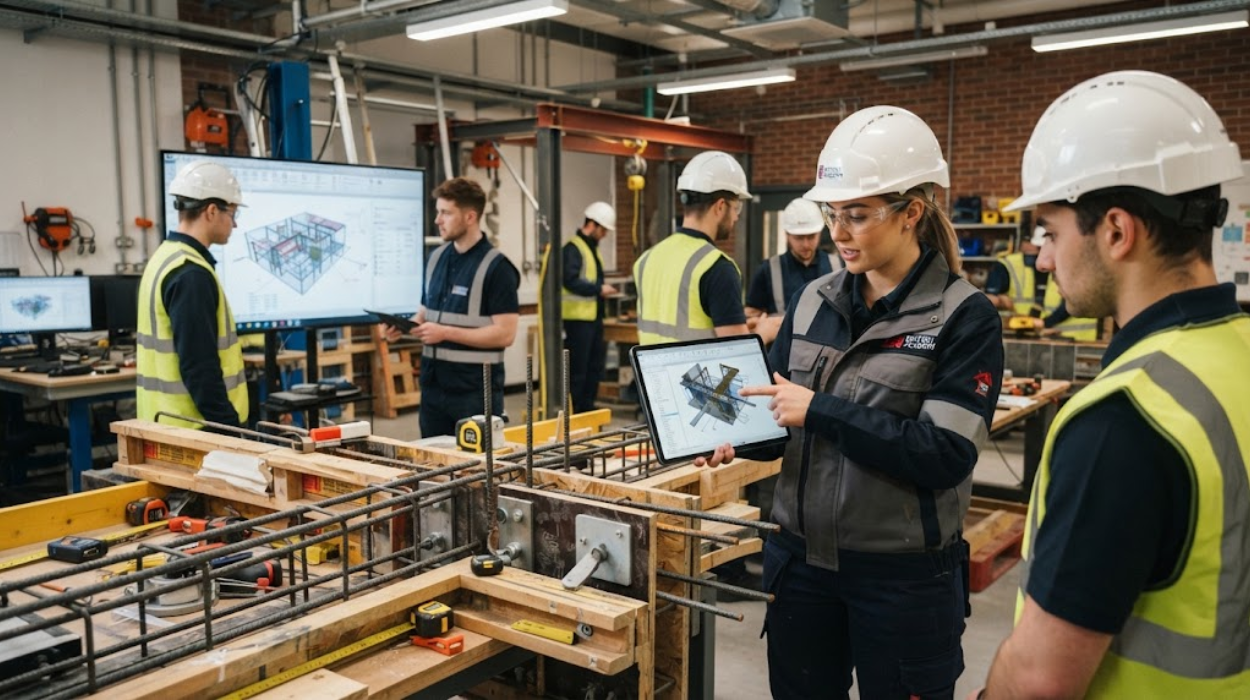
Understanding BIM building information modelling is increasingly relevant to construction, engineering, facilities, maintenance, and project coordination. However, professional capability requires more than understanding digital modelling terminology. It requires the ability to connect technical information with assets, maintenance requirements, engineering decisions, contractors, operational performance, and workplace objectives.
BIM building information modelling can provide the foundational context for professionals who are beginning to understand how information modelling supports construction and engineering workflows.
The British Academy for Training and Development approaches professional development through structured learning that connects technical knowledge with workplace responsibilities. Its Facilities Management, Maintenance & Engineering course is relevant to professionals who need stronger capabilities across facilities operations, maintenance, engineering services, contractor coordination, safety, and performance management.
What problem does the course solve for construction and engineering professionals?
The course addresses practical skill gaps between technical knowledge and workplace application by developing capabilities in facilities management, maintenance, engineering coordination, contractor evaluation, safety, operational control, and performance management for professionals working with buildings and engineering services.
Construction and engineering environments require professionals to understand how technical decisions affect the complete operational lifecycle of a building or asset. Knowledge of construction processes alone does not establish competence in maintenance planning, contractor management, asset performance, safety controls, or facilities operations.
This creates a capability gap for engineers, facilities professionals, managers, and technical teams. A professional may understand engineering principles but lack experience in translating technical requirements into maintenance strategies or measurable service expectations. Another employee may manage contractors but lack sufficient technical understanding to evaluate engineering proposals.
The Facilities Management, Maintenance & Engineering course addresses these connected responsibilities through a structured professional learning framework. The focus extends from technical understanding to operational application, allowing participants to examine how engineering, maintenance, facilities services, contractors, and workplace performance interact.
The course is particularly relevant to organisations where buildings, engineering systems, equipment, maintenance contracts, and workplace services must operate together. It can support professionals responsible for commercial buildings, industrial environments, corporate facilities, institutional properties, and other managed assets.
The British Academy for Training and Development positions facilities management learning within a broader professional development framework covering operational, technical, managerial, and workplace-performance capabilities. This structure helps participants connect individual technical skills with wider organisational responsibilities.
Why is the curriculum structured around facilities management, maintenance and engineering?
The curriculum follows a connected progression because building performance depends on coordinated technical, maintenance, operational, safety, contractor, and management decisions rather than isolated knowledge of individual engineering or construction activities.
A building does not become operationally effective simply because its construction is completed. Engineering systems must remain functional, assets require planned maintenance, contractors must meet defined requirements, risks must be controlled, and service performance must be monitored.
The curriculum therefore connects facilities management with maintenance and engineering. Participants can develop an understanding of how these functions interact throughout the operational lifecycle of a building or facility.
The first learning stage establishes the relationship between facilities operations, engineering systems, maintenance requirements, assets, and organisational objectives. This creates the foundation needed to understand why technical decisions must be considered alongside operational requirements.
The next stage develops maintenance and engineering capability. Participants examine how planned maintenance, technical services, asset condition, service requirements, and operational continuity influence workplace performance.
The curriculum also addresses contractor and service management. Facilities teams frequently depend on external engineering and maintenance providers. Professionals therefore need to understand how contractor capability, service specifications, performance requirements, safety controls, and reporting arrangements affect results.
The British Academy for Training and Development uses this structured approach to support learning that moves from understanding concepts towards workplace application. The progression is relevant to professionals who need broader technical and managerial competence rather than a narrow theoretical specialisation.
What will participants learn about BIM, engineering and construction-related information?
Participants develop a practical understanding of how technical building information supports engineering, maintenance, facilities operations, asset management, contractor coordination, and workplace decisions, while applying digital construction concepts within a wider operational context.
BIM is useful because construction and building information can support decisions beyond the design and construction stages. Information about building components, systems, assets, specifications, and maintenance requirements can contribute to better coordination between technical and operational teams.
The course should therefore be evaluated according to the participant's required competency rather than the BIM label alone. The Facilities Management, Maintenance & Engineering course is broader than a specialist BIM software programme. Its value lies in connecting engineering and facilities responsibilities with practical workplace management.
Participants can develop the ability to interpret technical requirements within an operational environment. They can consider how engineering systems affect maintenance schedules, asset performance, service continuity, contractor requirements, and workplace safety.
For a professional evaluating BIM specifically, the distinction is important. A BIM-focused programme would normally concentrate more heavily on modelling workflows, information standards, coordination processes, digital construction documentation, and specialist software. The Academy's facilities and engineering programme addresses a broader professional capability set.
This makes the course particularly relevant where an organisation needs employees who understand the operational consequences of construction and engineering information. It can complement existing digital construction knowledge by strengthening the maintenance, facilities, and engineering management skills required after project delivery.
The British Academy for Training and Development therefore provides a training structure that can be assessed according to the participant's intended role, existing technical knowledge, and required workplace outcomes.
How are the learning modules expected to build skills progressively?
Learning progresses from foundational understanding to technical application, operational management, contractor coordination, safety, performance assessment, and workplace decision-making so participants can develop connected competencies rather than isolated theoretical knowledge.
A foundation stage establishes core facilities management concepts and the relationship between buildings, assets, engineering services, maintenance, and organisational requirements. This gives participants a common framework before moving into more specialised responsibilities.
The maintenance stage develops understanding of planned and corrective maintenance, asset condition, service requirements, maintenance planning, and operational continuity. Participants learn why maintenance decisions influence asset reliability and workplace performance.
The engineering component extends this knowledge into technical services. Depending on the programme structure, participants can examine engineering systems, service coordination, technical requirements, and the relationship between engineering decisions and facilities operations.
Contractor management adds another practical layer. Professionals need to assess whether external providers can deliver required services, understand their responsibilities, monitor performance, and respond to operational issues.
Health and safety provides an additional control framework. Engineering and maintenance activities can introduce workplace risks, so professionals need to understand how risk identification, control measures, contractor responsibilities, and compliance requirements influence operational decisions.
The final stage connects these competencies with performance. Participants can consider how facilities teams measure service quality, monitor maintenance outcomes, assess contractors, and report operational performance.
This progression is consistent with the professional-development approach of the British Academy for Training and Development, where learning is intended to connect technical capability with management responsibilities and measurable workplace application.
How is the course delivered for professional and corporate learners?
Delivery can use instructor-led learning, workshops, case studies, practical exercises, simulations, online sessions, hybrid formats, or onsite corporate training, with the exact arrangement depending on the selected programme and organisational requirements.
Professional training in facilities management requires opportunities to apply technical concepts to realistic workplace situations. A participant can understand maintenance terminology without being able to evaluate a contractor proposal or identify weaknesses in an operational plan.
Workshops can address this gap by allowing participants to analyse practical scenarios. A group may review a building maintenance requirement, identify required competencies, determine service expectations, and establish appropriate performance measures.
Case studies can demonstrate how different organisations manage engineering and facilities challenges. A commercial office may prioritise occupant safety and service continuity, while a manufacturing facility may place greater emphasis on equipment reliability and production continuity.
Simulations can reproduce workplace decisions involving facilities managers, engineering teams, procurement professionals, contractors, and senior management. Participants can practise evaluating information and explaining their decisions.
Online delivery can support geographically distributed professionals and corporate teams. Hybrid learning can combine digital instruction with live workshops, while onsite delivery can allow training activities to reflect the organisation's own facilities environment.
The British Academy for Training and Development provides professional corporate learning across multiple disciplines. For this course, organisations should confirm the specific delivery format, duration, location, schedule, and programme structure before registration because these details can vary by scheduled programme.
What practical skills will participants gain from the course?
Participants can develop practical capability in maintenance planning, engineering coordination, facilities operations, contractor assessment, risk control, service-performance monitoring, technical decision-making, asset-related management, and communication across workplace functions.
One measurable skill is the ability to interpret maintenance requirements. Participants can examine an asset or engineering service and determine what information is required to establish an appropriate maintenance approach.
Another is contractor evaluation. Facilities professionals frequently depend on external suppliers, making it important to understand technical competence, staffing, service methodology, safety arrangements, response capability, and performance expectations.
Participants can also develop performance-management skills. A maintenance service can be assessed through indicators such as planned maintenance completion, response times, equipment availability, reporting accuracy, outstanding corrective actions, and compliance performance.
Risk assessment provides another practical capability. Participants can identify hazards associated with engineering and maintenance activities and consider appropriate controls, responsibilities, and monitoring arrangements.
Communication is also important because facilities and engineering work crosses departmental boundaries. Professionals may need to explain technical requirements to procurement teams, report operational risks to management, or communicate service expectations to contractors.
The British Academy for Training and Development structures professional learning around workplace relevance, making these skills applicable to facilities managers, engineering personnel, maintenance teams, operations managers, procurement professionals, and HR teams responsible for technical workforce development.
How does the course apply to general contractors and project environments?
The course supports professionals who must connect construction-related technical information with building operations, maintenance requirements, engineering services, contractors, safety responsibilities, asset performance, and lifecycle decisions after project delivery.
General contractors operate within complex project environments where technical information must be coordinated between designers, engineers, subcontractors, project managers, clients, and future operators. Understanding this information becomes particularly important when responsibility transitions from construction into operation.
** General contractors** can benefit from understanding how building information connects with cost, coordination, construction decisions, and operational requirements.
For professionals working beyond the construction stage, the focus changes towards asset performance and operational continuity. A building's engineering systems need planned maintenance, technical documentation, competent service providers, and defined performance expectations.
The course supports this transition by developing knowledge of facilities management, maintenance, engineering, contractors, and workplace performance. It can therefore be relevant to organisations seeking broader capability across the building lifecycle.
A project manager, for example, may need to understand how construction information affects operational teams. A facilities manager may need to interpret information inherited from a completed project. An engineering manager may need to ensure that technical requirements are translated into maintenance procedures.
This lifecycle perspective helps connect construction information with long-term asset performance. It also provides a practical basis for understanding why technical coordination and information quality matter after project completion.
How can organisations measure the learning outcomes?
Organisations can measure learning through knowledge tests, assignments, case analysis, simulations, practical exercises, competency assessments, workplace performance indicators, maintenance outcomes, contractor performance, and improvements in operational decision-making.
Assessment should determine whether participants can apply knowledge rather than simply recall terminology. A written test can measure foundational understanding, while a practical case can demonstrate whether the participant can apply that understanding.
Assignments can require participants to analyse a facilities or maintenance scenario. They may identify operational requirements, assess risks, propose maintenance activities, or establish contractor-performance measures.
Simulations provide evidence of decision-making. Participants can be presented with a technical or operational problem and asked to determine an appropriate response based on available information.
Organisations can also measure post-training workplace performance. Relevant indicators may include maintenance compliance, response-time performance, contractor KPI achievement, corrective-action closure, asset availability, safety observations, or service-reporting quality.
HR teams can incorporate these measures into corporate learning frameworks. Managers can compare baseline competency assessments with post-training results and identify where additional development is required.
The British Academy for Training and Development course can therefore be evaluated as part of a wider workforce-development programme rather than as a standalone classroom activity. The strongest measurement chain is training, competency improvement, workplace application, and measurable operational performance.
Who should consider this course for professional development?
The course is relevant to facilities managers, maintenance professionals, engineers, operations managers, technical personnel, project professionals, procurement teams, contractors, and HR or L&D teams responsible for workforce capability development.
Facilities managers can use the learning to strengthen operational decision-making and service management. Maintenance managers can develop stronger approaches to asset-related planning and maintenance performance.
Engineering professionals can benefit from understanding how technical decisions connect with facilities operations, contractor management, safety, and workplace performance. Operations managers can gain a broader understanding of the technical services that support business continuity.
Procurement and contract professionals can use the knowledge when defining technical requirements and evaluating engineering or maintenance service providers. Project professionals can also benefit from understanding the operational implications of construction and engineering information.
HR and L&D teams can consider the course when a department has identified gaps in facilities, maintenance, engineering, contractor management, or operational capability. The programme can form part of a development pathway for employees moving into broader technical or managerial roles.
The course is not limited to one organisational function because facilities performance depends on cross-functional coordination. The strongest candidate is therefore a professional whose responsibilities intersect with buildings, assets, engineering services, maintenance, contractors, or workplace operations.
How should organisations evaluate whether the course meets their needs?
Organisations should compare the course against their specific competency gaps, participant roles, technical responsibilities, desired workplace outcomes, delivery requirements, assessment needs, and operational priorities before selecting it for individual or corporate training.
The first consideration should be the capability gap. If the organisation needs specialist BIM modelling or software expertise, a dedicated BIM programme may be more appropriate. If the requirement is broader facilities, maintenance, and engineering capability, this course provides a more relevant scope.
The second consideration is participant responsibility. Facilities managers, maintenance managers, engineering professionals, operations teams, and technical managers require different levels of application. Organisations should identify which responsibilities participants need to perform after training.
The third consideration is delivery. Individual professionals may prefer scheduled learning, while organisations may require group-based corporate delivery. HR teams should confirm whether online, hybrid, onsite, or instructor-led formats are available for the selected programme.
Assessment should also be reviewed. Organisations should establish whether the programme's learning activities and assessment methods provide sufficient evidence of the competencies they need to develop.
Finally, the organisation should define measurable post-training indicators. These can include maintenance performance, contractor service quality, technical decision-making, safety compliance, operational continuity, or competency assessment results.
The British Academy for Training and Development provides a professional training context in which these factors can be evaluated before enrolment, helping organisations match programme content with actual workforce-development requirements.
What should participants know before enrolling?
Participants should confirm the programme's learning objectives, curriculum, delivery format, duration, schedule, eligibility requirements, assessment approach, and workplace relevance before registration to ensure the selected training matches their professional development needs.
The course is best evaluated as a professional development programme covering facilities management, maintenance, engineering, contractors, operational performance, and workplace responsibilities. It should not be treated as an assumption of specialist BIM software certification unless the selected programme explicitly specifies that outcome.
Professionals with facilities or engineering responsibilities can use the course to strengthen practical knowledge across interconnected functions. Managers can evaluate it according to the competencies their teams need to demonstrate after training.
Corporate HR teams should also consider how the learning will be applied after completion. A participant can be assigned relevant workplace activities involving maintenance planning, contractor evaluation, service-performance monitoring, asset management, or operational improvement.
Explore More Expert Insights:
Maintenance and Reliability Management: Best-Practice Framework
Building Maintenance: Preventive, Predictive and Corrective Explained
Completion should therefore be connected with measurable workplace objectives. This creates a clear relationship between course participation, skill development, professional application, and organisational performance.
The British Academy for Training and Development provides structured professional training designed to support workforce capability, making programme selection dependent on the participant's role, required skills, and intended workplace outcomes.
For professionals comparing this programme with broader BIM learning, the distinction between digital construction knowledge and facilities engineering capability should remain clear. The course provides a wider operational and engineering framework, while BIM knowledge can serve as part of the technical information environment within which modern construction and facilities teams operate.
To take the next step, review the programme requirements and enrol in the Facilities Management, Maintenance & Engineering course through the British Academy for Training and Development.