
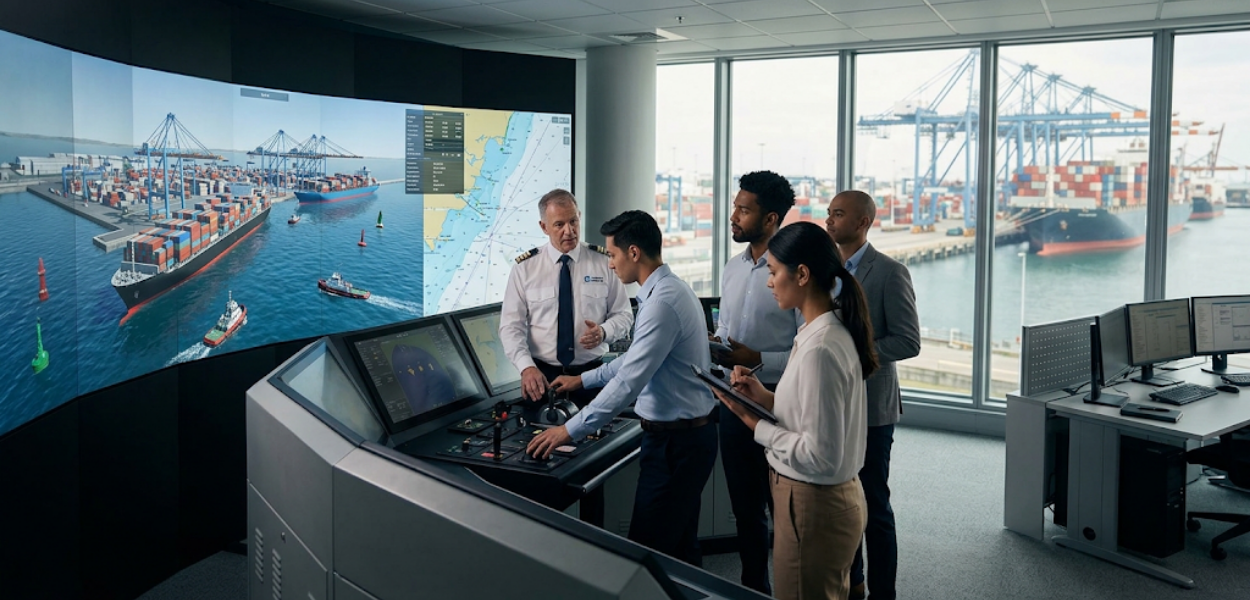
Understanding shipping, maritime transport, and ports requires more than knowledge of vessel movement. Professionals must understand how cargo, documentation, ports, transportation, suppliers, logistics providers and customers interact within an international supply chain. The British Academy for Training and Development structures professional training around practical workplace capabilities, allowing participants to connect logistics concepts with operational responsibilities.
Shipping is also becoming more technically and environmentally demanding. Organisations must understand changing transport requirements, port operations, supply chain coordination and emerging sustainability expectations. The green shipping technology landscape illustrates how maritime operations are changing, while maritime engineering careers demonstrate the growing technical knowledge required across the sector.
What does the Logistics, Supply Chain & Shipping course cover?
The course develops structured knowledge of logistics, supply chains, shipping and maritime transport so participants can understand how goods move between suppliers, ports, carriers, warehouses and customers while supporting efficient, controlled and measurable business operations.
The Logistics, Supply Chain & Shipping course is designed around the relationship between transportation, logistics management, supply chain coordination and shipping operations. This structure is relevant to professionals whose responsibilities extend across procurement, freight, distribution, warehousing, transportation or operational management.
The learning progression starts with core logistics principles. Participants examine how materials, products, information and services move through interconnected business activities. This creates the foundation for understanding transportation decisions and the relationship between logistics and wider supply chain performance.
Shipping is then considered as part of the wider movement of goods. Participants develop an understanding of maritime transport, cargo movement, port activities and the operational relationships between shipping companies, logistics providers, suppliers and customers.
The British Academy for Training and Development uses a professional training approach that connects knowledge with workplace application. This is particularly relevant for organisations where logistics decisions influence delivery schedules, inventory, customer service, procurement costs and operational continuity.
Why is this course structured around logistics, supply chains and shipping?
The integrated structure reflects the way maritime transport operates in business: shipping cannot be evaluated separately from procurement, inventory, warehousing, transportation, ports, documentation and customer requirements across the supply chain.
A shipping decision can affect several departments simultaneously. Selecting a transportation method can influence delivery time, inventory requirements, logistics costs and customer commitments. A delay at a port can affect warehouse schedules and production planning.
For this reason, the curriculum progresses from fundamental logistics concepts towards integrated operational understanding. Participants first establish the terminology and principles required to understand supply chain movement. They then examine transportation and shipping within that wider system.
This progression is useful for employees who have experience in one function but need broader operational knowledge. A procurement professional may understand supplier selection but need stronger knowledge of freight movement. A warehouse manager may understand inventory control but need to understand how port delays affect stock availability.
The course therefore supports cross-functional capability rather than isolated technical knowledge.
This approach is consistent with the Academy’s logistics training framework, which covers procurement, inventory, warehousing, transportation, distribution, supply chain integration and operational performance.
What will participants learn about shipping and maritime transport?
Participants learn how maritime transport fits into global logistics, how shipping activities connect with ports and supply chains, and how operational teams coordinate transportation, documentation, cargo movement and delivery requirements.
The shipping component develops an understanding of maritime transport as a commercial and operational activity. Participants examine the role of shipping within international trade and the movement of goods between origin and destination.
The learning areas can include:
Maritime transport fundamentals
Participants develop an understanding of maritime transportation, its role in international logistics and the operational characteristics that distinguish it from other transport modes.
They examine how organisations select transportation methods according to cargo requirements, delivery schedules, cost considerations and supply chain needs.
Shipping operations
Participants explore the activities involved in organising and controlling maritime shipments. This includes understanding the relationship between cargo owners, carriers, freight providers, ports and other stakeholders.
The objective is not simply to understand individual shipping activities. Participants learn how these activities contribute to the wider movement of goods.
Ports and cargo movement
Ports provide an important connection between maritime transportation and inland logistics. Participants examine how port operations support loading, unloading, storage, cargo handling and onward transportation.
Understanding this connection helps professionals identify where delays or coordination problems can affect the wider supply chain.
Shipping documentation and coordination
Documentation is an important part of international logistics. Participants develop awareness of the information required to coordinate shipments and maintain accurate records.
This supports operational accuracy and helps teams understand how documentation interacts with transportation, customs, cargo handling and delivery processes.
How does the curriculum build practical supply chain skills?
The curriculum builds capability progressively by moving from logistics principles to transportation, shipping, supply chain coordination, operational control and performance considerations, allowing participants to connect individual activities with wider organisational objectives.
The first learning stage establishes the foundations of logistics and supply chain management. Participants learn the terminology, functions and relationships that define modern logistics operations.
The second stage examines the main components of supply chains. This includes suppliers, customers, material flows, information flows and the coordination required between different stakeholders.
The third stage focuses on procurement and sourcing. Participants consider how purchasing decisions influence transportation, inventory and supplier relationships.
The fourth stage examines warehousing and inventory. Participants learn how stock levels, storage activities and material movement interact with logistics performance.
The fifth stage considers transportation and distribution. Participants examine transportation planning, route selection, delivery coordination and schedule management.
The sixth stage connects these areas with shipping and maritime transport. This helps participants understand shipping as part of an integrated logistics system rather than as a separate operational function.
The final progression focuses on efficiency, coordination, risk and performance. Participants can then evaluate logistics decisions according to cost, time, service and operational requirements.
The Academy’s existing logistics and supply chain programmes similarly emphasise integrated activities, transportation, warehousing, procurement, inventory and performance improvement.
What professional skills can participants develop?
Participants can develop planning, logistics coordination, transportation management, supply chain analysis, operational communication, risk awareness and decision-making skills applicable to shipping, procurement, warehousing and supply chain responsibilities.
A central outcome is improved operational understanding. Participants should be able to explain how different logistics activities connect and identify how changes in one area can affect another.
Planning capability is another outcome. Professionals can use structured approaches to evaluate material movement, transportation requirements and supply chain activities.
Coordination skills are also developed. Maritime logistics involves multiple stakeholders, making communication and information exchange essential to operational control.
Risk awareness is relevant because shipping and supply chains can be affected by delays, capacity limitations, documentation problems, supplier issues and transportation disruptions.
Participants also develop stronger decision-making capability. Instead of considering transportation or shipping in isolation, they can assess the effect of operational decisions on cost, time, inventory and service requirements.
For managers, this broader capability can support team coordination and performance management.
How is the training delivered?
Training can be delivered through instructor-led sessions, practical workshops, online learning, hybrid formats or organisation-specific programmes, depending on participant requirements, organisational location, learning objectives and the level of practical application required.
The British Academy for Training and Development uses professional training formats designed to accommodate different corporate learning requirements. Delivery can combine structured instruction with practical discussion and workplace application.
Instructor-led workshops are useful when participants need to examine operational situations collectively. A shipping disruption, for example, can be analysed from procurement, logistics, warehouse and customer-service perspectives.
Online delivery can support geographically distributed teams. Participants can study structured material without requiring all employees to be physically present in one location.
Hybrid delivery can combine independent preparation with live sessions. This allows participants to establish foundational knowledge before using instructor-led time for application and discussion.
Onsite delivery can be appropriate when an organisation wants training to reflect its own logistics processes, reporting structures or operational challenges.
The delivery method should therefore be selected according to the capability being developed rather than treated as a fixed feature of the course.
How are participants assessed during the course?
Assessment should establish whether participants understand core concepts, can apply logistics knowledge to operational situations and can make structured decisions involving transportation, shipping, supply chain coordination and workplace performance.
Knowledge tests can evaluate understanding of logistics terminology, transportation principles, supply chain relationships and maritime operations.
Assignments can require participants to examine a logistics situation and recommend an appropriate operational response.
Case studies can present realistic problems involving shipping delays, inventory constraints, supplier issues or transportation decisions.
Simulations can provide a controlled environment for decision-making. Participants may need to respond to changes in delivery schedules, cargo requirements, transportation availability or port operations.
Group exercises can assess communication and cross-functional coordination. These activities are particularly relevant for corporate teams because logistics decisions rarely belong to one department.
The British Academy for Training and Development can therefore use assessment as a means of demonstrating application rather than simply confirming attendance.
Who should attend the Logistics, Supply Chain & Shipping course?
The course is suitable for professionals and managers working across logistics, supply chain, procurement, transportation, shipping, warehousing, distribution and operations who need broader knowledge of integrated maritime and commercial supply chain processes.
Relevant participants can include logistics professionals responsible for transportation coordination and shipment planning.
Supply chain professionals can use the programme to strengthen their understanding of maritime transportation and its relationship with other supply chain functions.
Procurement professionals can benefit from understanding how supplier decisions influence freight, delivery and inventory.
Warehouse and distribution managers can develop greater awareness of how upstream shipping and port activities affect downstream operations.
Operations managers can use the course to strengthen cross-functional decision-making.
HR and L&D teams can also evaluate the programme as part of workforce development when employees need structured logistics and shipping capability.
The course is therefore relevant to both specialists seeking broader knowledge and managers responsible for coordinating multiple operational functions.
What workplace results can organisations expect?
Organisations can expect stronger logistics awareness, improved cross-functional coordination, better transportation decisions, clearer understanding of shipping processes and improved employee capability in managing interconnected supply chain activities.
The first measurable improvement can be knowledge consistency. Employees across departments gain a shared understanding of logistics and shipping terminology.
The second is stronger coordination. Teams can better understand how procurement, transportation, warehousing and distribution depend on one another.
The third is improved operational decision-making. Employees can assess transportation and shipping choices according to defined business requirements rather than isolated departmental priorities.
The fourth is improved risk awareness. Teams become better equipped to identify potential disruptions and consider their effect on the wider supply chain.
The fifth is stronger managerial capability. Managers can use integrated logistics knowledge when reviewing operational performance and coordinating specialist teams.
For HR departments, these outcomes can be connected to competency frameworks, role development and internal progression pathways.
How does the course support corporate workforce development?
The programme can support corporate workforce development by converting logistics and shipping knowledge into role-specific capabilities that HR teams, managers and operational leaders can evaluate through practical application and measurable workplace performance.
Corporate training should begin with a defined capability requirement. An organisation may need stronger shipping knowledge because employees are managing international freight without sufficient maritime awareness.
Another organisation may need to improve coordination between procurement, logistics and warehouse departments.
The British Academy for Training and Development can position training around these capability requirements rather than treating learning as an isolated activity.
HR teams can identify relevant participant groups before delivery. Managers can define the operational behaviours expected after training. L&D teams can then connect learning outcomes with workplace responsibilities.
Post-training evaluation can examine whether participants apply the knowledge in daily operations. Relevant indicators may include fewer documentation errors, improved coordination, better delivery planning or stronger understanding of transportation decisions.
This creates a direct connection between professional learning and organisational capability.
How should decision-makers compare this course with other maritime learning options?
Decision-makers should compare curriculum coverage, maritime relevance, logistics integration, practical application, delivery format, participant suitability, assessment methods and measurable outcomes rather than selecting a course based only on its title or duration.
A course focused only on maritime engineering may be appropriate for highly technical engineering responsibilities. A programme focused only on port operations may suit professionals responsible for terminal activities.
The Logistics, Supply Chain & Shipping course serves a broader operational purpose by connecting shipping with logistics and supply chain management.
This distinction matters when evaluating workforce requirements. Professionals responsible for commercial logistics may need integrated knowledge rather than specialised engineering capability.
For readers evaluating progression from maritime career awareness into professional training, the maritime engineering learning perspective can help clarify the distinction between technical maritime roles and broader logistics and shipping responsibilities.
The final selection should therefore reflect the employee's current role, expected responsibilities and required competency level.
What should participants know before enrolling?
Participants should have a clear professional reason for developing logistics, supply chain or shipping capability and should be prepared to connect course concepts with operational responsibilities, organisational processes and real workplace decision-making.
The course can suit professionals at different stages because the curriculum begins with fundamental concepts before progressing towards integrated operational understanding.
Participants do not need to approach shipping as an isolated subject. The greatest value comes from relating maritime transportation to procurement, inventory, warehousing, distribution and supply chain performance.
Organisations enrolling several employees can also use the programme as a shared capability-development initiative. Teams from procurement, logistics and operations can develop common terminology and a more consistent understanding of supply chain relationships.
The Academy’s shipping and maritime training portfolio includes programmes covering cargo handling, maritime logistics, port management, shipping documentation, commercial shipping and global maritime operations, demonstrating the wider professional context in which this learning can be applied.
What is the final decision criterion for this course?
The strongest reason to select this programme is curriculum fit: it provides an integrated learning path for professionals who need to understand logistics, supply chains, shipping and maritime transport as connected elements of corporate operations.
The decision should begin with the capability gap.
If employees need to understand only one specialised technical activity, a narrower programme may be more suitable. If they need broader knowledge of how shipping interacts with logistics, procurement, transportation, warehousing and supply chain performance, an integrated programme is more appropriate.
The British Academy for Training and Development provides a professional training environment in which these areas can be considered as connected workplace capabilities.
Participants should leave with a clearer understanding of how goods move, how maritime transportation supports supply chains, how ports connect different stages of distribution and how logistics decisions influence organisational performance.
For organisations, the course can form part of a structured workforce-development pathway. For individual professionals, it can provide a broader operational foundation for responsibilities across logistics, shipping and supply chain functions.
Explore More Expert Insights:
British Academy for Training and Development& Container Logistics and Terminal Operations Co
Why British Academy for Training & Development& Demand Planning Training Is the Backbone
The final decision should therefore be based on role relevance, curriculum coverage, delivery requirements, practical application and the measurable skills the organisation or participant needs to develop.
To review the available maritime and shipping training pathway and enrol in this programme, participants can use the British Academy for Training and Development’s shipping, maritime and ports training category.