
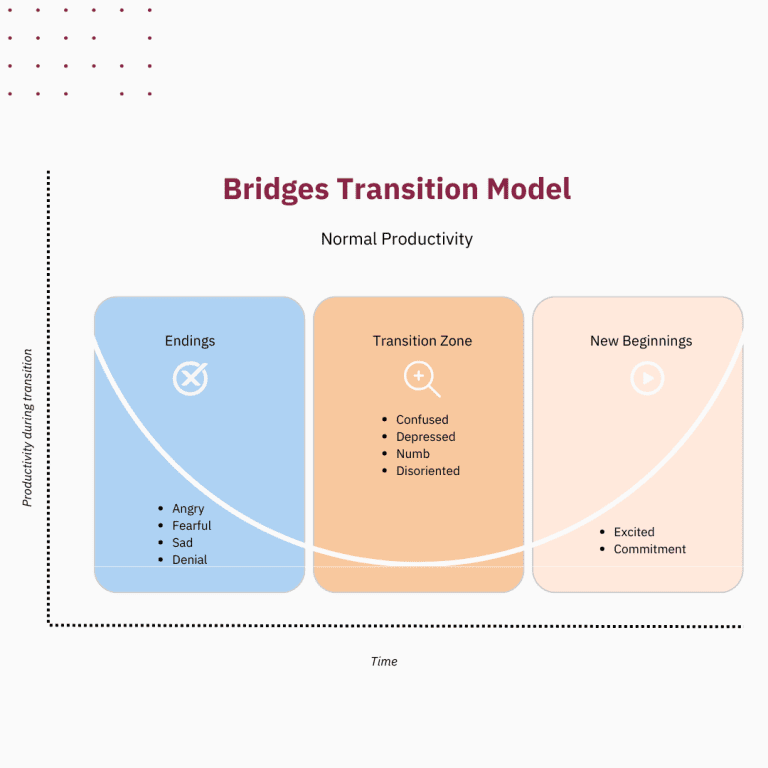
The Bridges Transition Model is one of the most insightful frameworks for understanding and managing change in both personal and professional settings. Developed by William Bridges, the model emphasizes the human and psychological aspects of transitions, asserting that successful change is achieved by addressing the emotional journey individuals experience rather than focusing solely on external factors. This article explores what the Bridges Transition Model entails, its three core phases, and how to apply it effectively. We also suggest several training courses tailored to help individuals and organizations utilize this model for smooth transitions.
What is the Bridges Transition Model?
The Bridges Transition Model centers around the idea that change consists of internal psychological shifts rather than merely external adjustments. Unlike many other change models that focus on processes and structures, the Bridges Model emphasizes individuals’ emotional experiences and the mindset shifts required to accept change. This model divides the process into three distinct phases: Ending, Neutral Zone, and New Beginning. By navigating these stages, individuals and organizations can better handle the psychological and emotional challenges that often accompany significant transitions.
Phases of the Bridges Transition Model
1. Ending (Letting Go)
The transition begins with the Ending phase, where individuals must let go of the current state or their old ways of thinking. This phase often brings about feelings of loss, fear, and confusion as people let go of familiar routines. Courses like “Managing the Ending Phase in the Bridges Transition Model” offer strategies to help participants recognize and process these emotions, making it easier to let go of the past and prepare for what comes next.
2. Neutral Zone
The Neutral Zone is the phase between the old and the new, where individuals may feel uncertain and unsettled. This stage is often marked by confusion as people haven’t fully embraced the new changes yet. However, it’s also a period ripe with potential for creativity and exploration. Courses such as “Transitioning Through the Neutral Zone: Navigating the Unknown” guide participants on coping strategies for this ambiguous stage and offer tools to leverage this period for growth and development.
3. New Beginning
After the Neutral Zone comes the New Beginning, where individuals start to embrace the change and commit to the new reality. This stage often brings renewed energy, a sense of purpose, and optimism. To succeed here, individuals need encouragement, guidance, and the tools to integrate these new practices into their lives or work. “Embracing the New Beginning: Practical Steps for Successful Transitions” is a recommended course that provides participants with strategies to internalize and make the most of the change.
Importance of the Bridges Transition Model
The Bridges Transition Model is widely valued for its focus on the emotional and psychological aspects of change, which makes it versatile and effective across various sectors, including personal development, business, healthcare, and education. By addressing the emotional journey that comes with change, this model helps individuals adapt more readily and reduces resistance to change within teams and organizations.
Key Benefits of the Bridges Model:
• Enhanced Self-Awareness: Helps individuals understand their responses to change, making it easier to manage their reactions.
• Improved Organizational Performance: The model aids in guiding teams through organizational changes, resulting in smoother transitions and better outcomes.
• Strengthened Psychological Resilience: Encourages adaptability and the ability to thrive amid change.
Recommended Training Courses on the Bridges Transition Model
For those seeking to learn how to apply the Bridges Transition Model effectively, there are various specialized courses that offer comprehensive training. Here are some of the top choices:
1. “Introduction to the Bridges Transition Model: Fundamentals and Applications”
This course provides an in-depth introduction to the Bridges Transition Model, explaining each stage and offering practical tools for managing transitions.
2. “Managing the Ending Phase: Letting Go and Moving Forward”
Focused on helping participants process emotions associated with the Ending phase, this course offers insights into how to let go of the past and prepare for new opportunities.
3. “Navigating the Neutral Zone: Understanding the Psychological Transition”
This course delves into the Neutral Zone, teaching participants how to cope with the uncertainties of this in-between stage and channel it for growth and innovation.
4. “Embracing the New Beginning: Strategies for Success in the Bridges Transition Model”
This course equips participants with tools to fully integrate and embrace the New Beginning stage, ensuring a seamless transition to the new reality.
5. “Applying the Bridges Transition Model in the Workplace”
Designed for managers and HR professionals, this course shows how to implement the Bridges Transition Model in a corporate setting, improving team dynamics and easing transitions during organizational changes.
6. “Building Psychological Resilience with the Bridges Transition Model”
This course teaches techniques for developing mental resilience, preparing participants to face change with confidence and adaptability.
7. “Leading Teams Through Change: The Bridges Model for Effective Leadership”
Tailored for team leaders, this course covers how to use the Bridges Transition Model to lead teams through change, enhancing morale and reducing resistance.
Choosing the Right Course
Selecting the appropriate course depends on the type of change you’re facing and your unique needs. For personal development, foundational courses like “Introduction to the Bridges Transition Model” and “Managing the Ending Phase” can be a great starting point. Meanwhile, professionals or managers may benefit more from “Applying the Bridges Transition Model in the Workplace” or “Leading Teams Through Change”, which focus on guiding groups through change.
Best Practices for Using the Bridges Transition Model in Work Settings
Implementing the Bridges Transition Model in professional settings requires some best practices to ensure smooth transitions. These include:
1. Clarify the Purpose of Change: Articulate why the change is necessary and what benefits it will bring, helping reduce resistance and motivating team members to embrace the shift.
2. Provide Emotional Support: Recognize that change can be emotionally taxing and offer resources, such as counseling or workshops, to help employees manage their feelings.
3. Continuous Training: Enroll team members in courses on the Bridges Model to support their ability to adapt, ensuring they are prepared to handle each stage of the transition.
4. Maintain Open Communication: Keep lines of communication open throughout the transition process to address concerns, share updates, and reinforce commitment to the change.
The Bridges Transition Model is an invaluable framework for anyone looking to navigate change effectively, whether in personal life or in a professional environment. By focusing on the psychological journey and understanding the emotional impact of each phase, the model empowers individuals to move through change more smoothly and with greater confidence. With a wide array of specialized training courses available, from introductory overviews to leadership applications, the model provides tools and insights essential for adapting to new realities.
Whether you are just starting with change management or seeking advanced skills in navigating transitions, enrolling in a Bridges Transition Model course can be transformative, equipping you with the knowledge and techniques to handle change with resilience and clarity.