
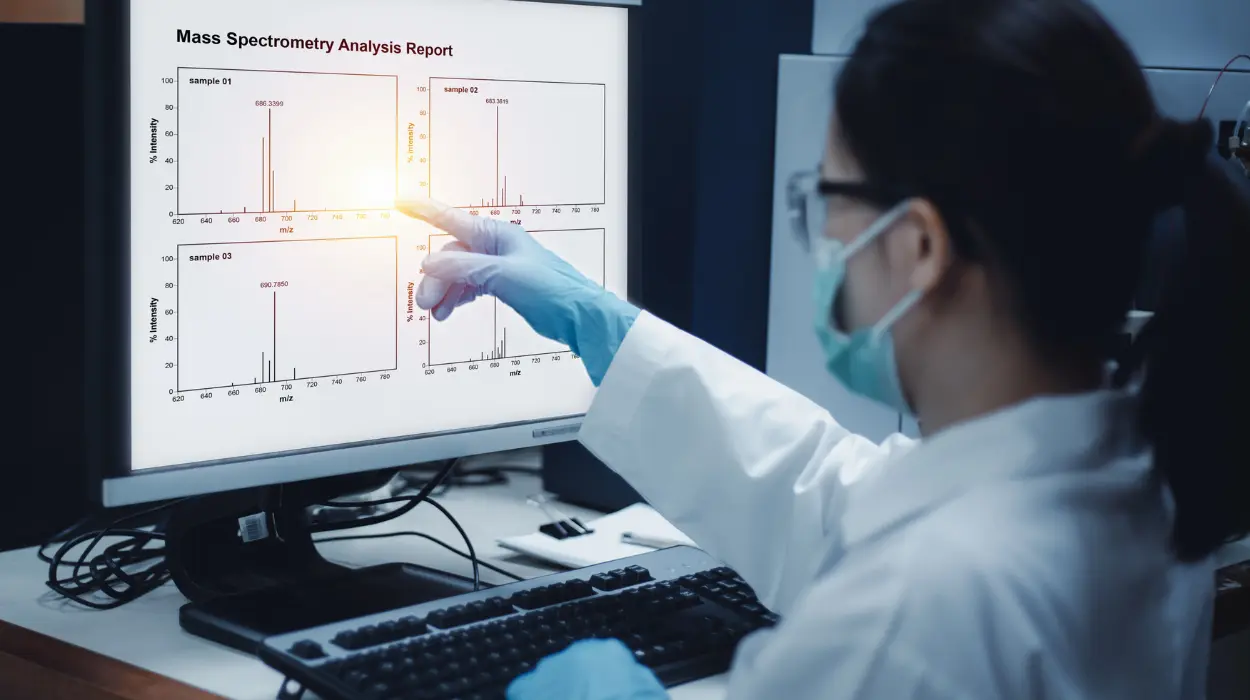
Liquid chromatography happens to be one of the most powerful and widely used techniques in chemistry as well as biology. It is used mainly for separation, identification, and analysis of compounds in a mixture. Its significance lies within a lot of the avenues like research, pharmaceuticals, environmental testing, and even food safety. But what is liquid chromatography and how does it work? The basics, principles, and types of liquid chromatography will be explored in this article pretty plainly.
Enroll now in the Gas and Oil Management course to enhance your skills in resolving disputes and fostering stronger collaborations.
Liquid chromatography is a laboratory technique employed to separate different parts of a mixture, based on the behavior of those components in relation to two phases: namely, the mobile phase and the stagnant phase. The mobile phase is simply a liquid that transports a sample through a specific medium, whilst that stagnation phase is a solid or liquid coating holding the column upon which certain aspects of the sample are kept longer than the others.
The very root of the principle of liquid chromatography lies in both the interaction of molecules of the sample with the stationary and the mobile phases. Here we go:
The chromatographic system can be injected with the mixture to be analysed.
The mobile phase transports the sample through the stationary phase. Since different components of the sample interact differently with the stationary phase, some components that interact strongly move more slowly, while those with less interactions move faster.
The components are now separated, and as they leave the column, they should pass through a suitable detector. What you have is a chromatogram, which should present peaks for each compound.
The actual separation is due to differences in properties such as size, polarity, or charge. The components have different speeds within the stationary phase because of these differences.
Indeed, liquid chromatography is one of the biggest contributions to humanity, catering to versatile and precise analysis, many fields use it, and several key applications are given below:
To analyse drug compounds, control quality, and develop new medicines.
It is used to detect and quantify pollutants in samples of water, soil, and air.
It ensures the safety and quality of food through contamination, preservatives, and other additives.
It studies proteins, nucleic acids, and all other biological molecules.
In forensics, analysts use the drug, toxins, and others.
These are just some applications in which liquid chromatography plays a significant role in the life of individuals by making it easier for scientists to carry out their research.
Several types of liquid chromatography are engineered for different analytical requirements. These forms include the following:
Among all types of liquid chromatography, HPLC tops the list as the most common and highly developed one. Pulsed force is applied into a mobile phase against the stationary phase with HPLC to speed separation and increase efficiency.
An advanced technology of compounding HPLC, UHPLC works under higher pressures than HPLC. This higher pressure enhances resolution and reduces run time. UHPLC is especially important for industries that demand very high performance such as pharmaceutical analysis.
This particular liquid chromatography works on the principle of isolating and gathering relatively large quantities of one compound i.e. a molecule from the rest in the sample.
The essential principle on which this kind of chromatography is founded upon is the size of macromolecules in solution. Smaller molecules can enter the pores of the stationary phase and remain retained longer than larger ones that pass through the column directly.
IEX separation is based on the charge. The charged groups included in the stationary phase attract oppositely charged molecules in the sample.
This is a highly selective technique based on specific interactions that may occur between a molecule and the stationary phase. For example, specific proteins can be bound with antibodies.
A polar stationary phase with a non-polar mobile phase Characterizes NPC. It is thus appropriate for separating polar molecules such as sugars, amino acids, and even certain drugs.
It Provided Several Advantages With Liquid Chromatography.
High sensitivity and accuracy
Ability to analyse a broad spectrum of compounds
Prompt and efficient separation
Compatibility with different detectors for particular analyses
Consequently, it has become one of the most indispensable instruments available in laboratories across the world.
Liquid chromatography provides great benefits but entails some limitations:
High operational costs, especially for HPLC and UHPLC systems.
Requirement for skilled operators.
Potential for column clogging or degradation.
However, these difficulties do not stop the advancements in technology, which have enabled improved efficiency and accessibility to liquid chromatography.
While liquid chromatography is ever dynamic, some of its emerging trends include:
Development of portable equipment for on-site analysis.
Reduction of solvents and environmental impact.
The LC coupled with Mass Spectrometry (LC-MS), is becoming more common to allow intricate molecular dissection and analysis.
They embrace and drive research in the wide expansion of liquid chromatography applications and capabilities in said industries.
When deciding on the right liquid chromatography form, various factors have to be considered, such as:
For larger biomolecules, size-exclusion or affinity chromatography is quite often used. For charged compounds, ion-exchange chromatography is the preferred option.
Quantitative analysis is best performed via analytical techniques such as HPLC. Isolation and purification are done by preparative chromatography.
UHPLC proves to be faster but usually costs several times more than standard HPLC.
An expert may advise on the best option, or trial runs may be done for any specific applications.
Liquid chromatography has turned out to be the most adaptable and vital technique in separating, analysing, and identifying compounds in different fields, like pharmaceuticals or environmental science. Each type and application fits a specific analysis area according to the precision and efficiency needs. And despite its challenges, the technology continues to go further.
The British Academy for Training and Development offers overall courses in Liquid Chromatography.