
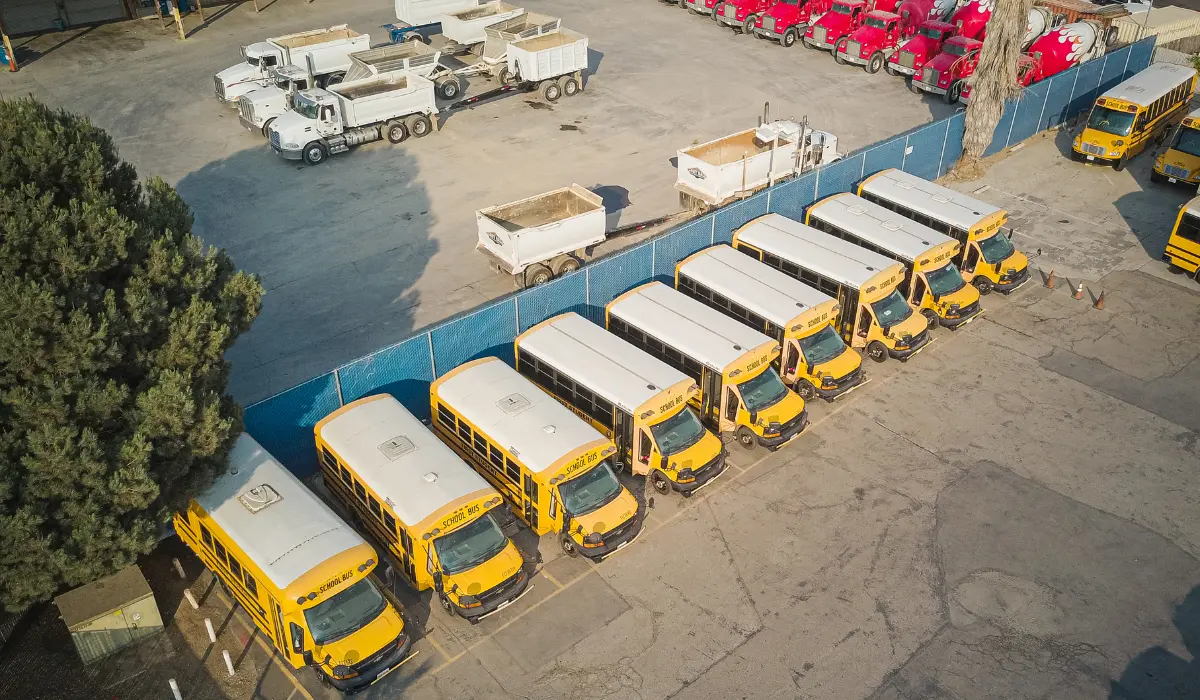
Fleet management in logistics deals with the coordination, control and tracking of vehicles used to transport goods. Fleet management helps logistics companies with the optimal and safe operation of their vehicles, which includes saving money. This entails maintenance, drivers, routes, fuel, and compliance supervision through technology and strategies. An effective fleet management system can increase accurate delivery, customer satisfaction, and organisational performance. Fleet management has today become a must-have for companies that want to stay competitive in a fast-moving supply chain.
Significance of Fleet Management in Logistics
Fleet management ensures that the logistics business runs aligned and timely; hence, it streamlines the time and cost aspect of operations. It cuts out any delays, enhances driver performance, and acts as a control mechanism of fuel consumption. Without fleet management, companies will have unnecessary costs mismanaged in terms of delivery, maintenance, and customer satisfaction. The British Academy for Training and Development offers an Effective Logistics Management Course designed for professionals aiming to master modern logistics.
Fleet management serves an important strategic role by making the transportation system completely reliable. Keeping the entire operation under rain on a tight schedule can be made easier for the logistics manager through a highly efficient distribution network.
Key Components of Fleet Management
Here are the following key components of fleet management:
1. Vehicle Tracking
Vehicle tracking makes use of the GPS systems in order to monitor each vehicle and give their real-time positions. This ensures efficiency of routes and hence allows logistics managers to make instantaneous decisions in case of delays or issues.
2. Route Optimisation
Route optimisation happens when distance, traffic distance, and delivery deadlines are produced to use less time and fuel. This means deliveries will be on time and vehicles will suffer less wear and tear.
3. Fuel Monitoring
Fuel management tools monitor consumption patterns and highlight inefficiencies or theft. Well-tracking helps in cost-cutting and profitability boosting.
4. Maintenance Management
Regular maintenance scheduling prevents unexpected breakdowns. Prolongs vehicle life and aids in the smooth running of operations.
5. Driver Performance
Monitoring of driver behaviour helps in the reduction of risky driving, accidents, and fuel wastage. Good driver performance monitoring also facilitates training and award systems for the drivers.
Fleet manager role in logistics
The differences arising between fleet management and logistics are not far apart. A logistics manager oversees the inventory and negotiates rates for the fleet, while the job of the fleet manager is to get that inventory delivered on time, on budget and without hassle. This is achieved through monitoring vehicle routes, checking driver behaviour during the transportation process, and data analysis that ensures goods are in the right place at the right time while at the same time safeguarding the fleet.
A fleet manager in logistics is very salient to push businesses to the next level. The love affair between fleet management and logistics is the heartbeat because this is the cradle of product generation and the point at which consumers are given their products.
How does logistics influence business operations?
Your business operations are mainly running through the delivery of products and services, so by now, logistics would have to be in place to ensure a successful operation. However, understanding the various kinds of logistics and how they affect your overall operations is vital to ensure you really do have them. Let's take an example.
The point is, in the clothing industry, having the whole piece of clothing would end up as wearable, pure and simple. But before anything else, this has to start somewhere:
The process starts with inbound logistics, transporting raw materials like fabrics and textiles. Keeping the next step in mind, these fabrics have already been chosen to bring the design to life and are therefore being transported to their next home, which is manufacturing/sewing. We need fabric to make clothes, and that fabric has to find its way to where it can be manufactured into the desired product, and this is where inbound logistics plays a fundamental role.Once the clothes have been sewn and are ready to be sold, the outbound logistics portion takes effect. Outbound logistics is the transfer of the end product, or the finished product, to where it is going to be sold. This can include online sales or physical stores.If we are not fortunate enough to have super-advanced technology today, whereby purchased clothing can magically resize to fit the body of the buyer, then we are back to reverse logistics. Returning products to their manufacturer is a necessary but evil aspect of logistics every business dreads. If no sales happen or there is a defect with a product, the warehouse would send the goods back to the place where they are manufactured. What happens next is entirely in the company's hands: whether to recycle products or destroy them.
To effectively achieve and maintain success, a company must understand the flow initiated by a logistics-based process. There builds a chain from the transport of raw materials to the point of actual production. This whole operation is dependent upon the efficient functioning of each department and the execution of their respective responsibilities."
Benefits of Fleet Management
Four key benefits of fleet management are:
Cost Reduction: Efficient scheduling of vehicles, savings on fuel, and reduction in repairs direct money to the bottom line. The high return on investment makes fleet management attractive for businesses.Improved Delivery Time: Optimised routing and real-time tracking can help companies achieve timely deliveries, thereby establishing trust and long-term relationships with their customers.Enhanced Vehicle Lifespan: Periodic maintenance and systematic usage guarantee vehicle reliability and longevity, which means reduced capital expenditures due to premature replacements.Safety and Compliance: Fleet management ensures that the vehicles and drivers are compliant with legal safety requirements. It also makes audit inspections easier and cuts down the risk of incurring penalties.Challenges in Fleet Management
There really is so much operational complexity in running fleets on different routes and across different states. It requires constant commitment and smart tools without digital systems. Digital systems also cause inefficiencies. Other challenges in fleet management are:
Driver Resistance to Monitoring: Some drivers do not like being tracked, and managers must balance the need for monitoring against the requirement of keeping morale high.Fuel Costs Are Another Headache: An unstable fuel price weakens a budget. Fleet systems must readjust to route efficiency and fuel conservation.Software and data issues: Problems in fleet software or incorrect data input can influence the fleet manager's decision-making. Continuous checks and updates are thus mandated.Flexibility and Scalability of Fleet Systems:
Fleet management systems can be customised to fit the various needs of different logistics companies. While basic tracking might be enough for a small business, large-scale organisations are recognising their requirements for advanced analytics and integrations. Scalable software can grow with the company by providing coverage for new routes, vehicles, and drivers as its operations expand. Features like geofencing, auto alerts, and role-based access make for easy management. Scalability ensures relevance and cost-effectiveness of the investment over time.
Fleet Management and Customer Satisfaction
Deliveries made with precision and reliability are key to customer satisfaction. Fleet management makes sure that the customers receive their packages without delay and in good condition. Real-time tracking imparts visibility to the shipment process in the eye of the customer, thus ensuring trust. Efficient routes and communication mean fewer chances of delivery failures. Furthermore, proper conduct by the drivers gives the company all the credit. Good fleet management helps logistics companies to surpass customer expectations, thereby creating a competitive advantage.
Future Trends in Fleet Management
The fleet management sector is a technology-led space. AI, automation, and electric vehicles are changing the way fleets work. Predictive analysis will, among other things, become commonplace in predicting maintenance needs and planning deliveries. Autonomous vehicles and drones may empower last-mile logistics. Cloud-based platforms for fleet management are likely to enhance data interaction and remote access. At the same time, as innovations continue becoming the trending mode of operation, logistics firms that integrate such technologies will remain ahead.
The Strategic Value of Fleet Management in Logistics
Fleet management is much more than simply managing vehicles. It is a strategic function, which enhances almost every aspect of logistics. Cost savings, safety, environmental considerations, and customer satisfaction – the four components that form the core of business profitability – are open to influencing by it. The industry players utilising modern fleet solutions acquire improved control, efficiency, and flexibility.