
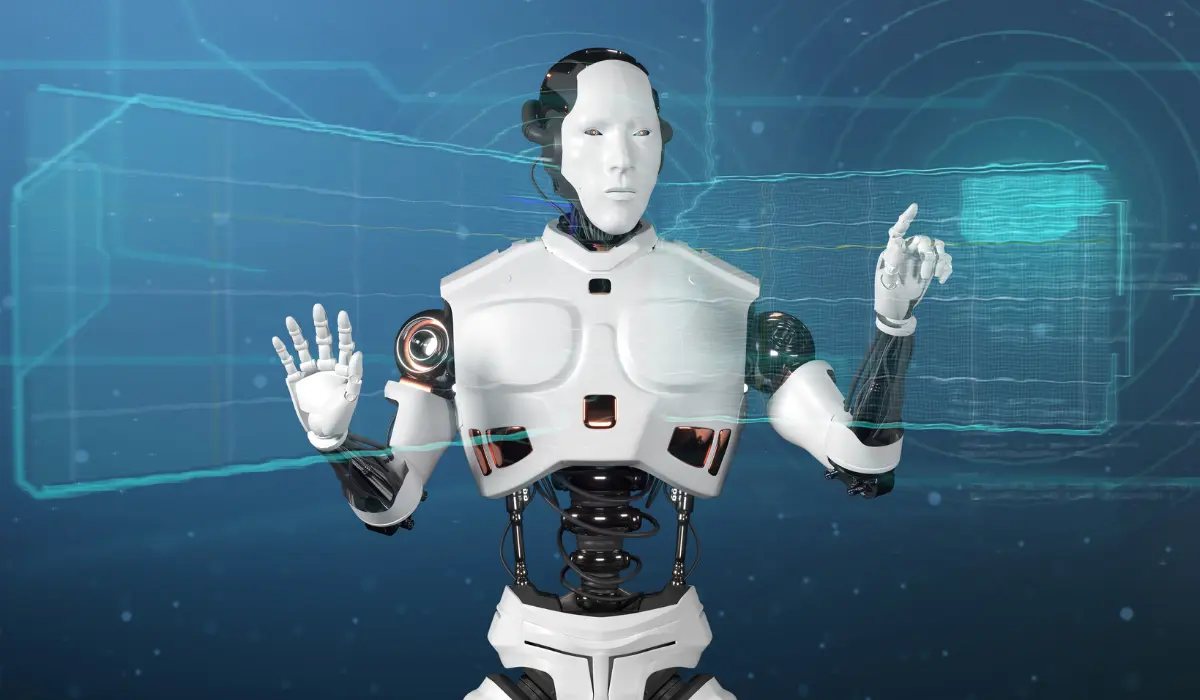
Artificial intelligence has developed extensively in the last few decades and, with its influence, goes on to seep into various types of industries and sectors, redefining how we think, work, and deal with technology. From a self-driving car to a voice assistant, AI is indeed revolutionizing the world for us. The future can only be envisioned as great with the limitless possibilities associated with AI. Learn more about what exactly is Artificial Intelligence by joining the Training Program in Artificial Intelligence Strategies for Business Leaders offered by the British Academy for Training and Development.
Artificial intelligence refers to the ability to recreate human capability using machines, especially computer systems, to imitate the activities of human cognitive processes in the aspects of learning, problem-solving, reasoning, and decision-making. It has several subfields, including: machine learning where machines get better with experience, natural language processing, computer vision, and robotics.
AI applications are part of daily life in the form of voice recognition software, recommendation engines, and even chatbots. But the possibilities go far beyond those applications, touching upon the health sector, finance, manufacturing, and education, as well as many others. As technology advances, so does the capacity of AI to bring about major changes in society.
With the rapid pace of AI research and development, here are the 10 predictions for the future of AI:
AI is found in many parts of life, from voice assistants like Siri and Alexa to the recommendation algorithms on Netflix and Amazon. In the future, AI will become more seamlessly integrated into daily life.
Imagine a future where AI could manage and predict our schedules, respond to our needs, or even execute our tasks and decisions without needing human beings. AI predict my future could be an integral part of our lives. It might almost seem as if another part of the human intellect.
In smart cities, the AI would manage everything from traffic flow and waste management to creating efficient environments within urban cities. AI would study data in real-time to better optimize energy use, public transportation, and urban safety, tremendously improving urban lifestyle.
AI is already doing some great things in healthcare, and the future looks even brighter. Over the next few years, AI will change the landscape of healthcare through better diagnosis, treatment planning, and care for patients. Machine learning algorithms will analyze enormous medical data, including imaging, genetic information, and patient records, to identify patterns and give accurate diagnoses in mere seconds.
AI-powered robotic surgeries will become more precise and accessible, minimizing human error. Additionally, personalized medicine will thrive as AI systems assess an individual's genetic makeup to recommend tailored treatments. AI can also predict disease outbreaks, accelerating responses to public health emergencies. AI will revolutionize early detection and personalized treatment plans, potentially saving millions of lives.
Probably one of the most talked-about AI developments would be self-driving cars. Self-driving cars, trucks, and drones are going to appear more frequently on roads over the next decade. AI will power systems that enhance navigation in vehicles, improve safety in traffic, and eliminate human error in driving.
Autonomous vehicles will not only reduce road accidents but also streamline the transportation industry. For instance, self-driving trucks will deliver goods faster and at reduced costs compared to humans without resting.
AI will also open smart cities with connected and optimized transportation networks using AI. This might lead to the creation of intelligent transportation systems that manage real-time data to control the flow of traffic and prevent congestion.
So what do artificial intelligence predictions look like? The next decade will see a fully autonomous vehicle becoming a norm, changing the game in transportation and logistics.
The rise of AI will change the dynamics of the workforce. As automation replaces a few jobs, AI also creates a new category of jobs that never existed. Future jobs will be working alongside AI systems and may include AI maintenance, data analysis, and training of AI.
AI will replace most of the work in service sectors, ranging from health care to banking, thereby automating routine work while giving humans scope to address more complex and creative functions as well as strategic needs. But with it comes the enormous upskilling and reskilling requirement.
Hybrid models, harnessing the collaboration of AI with human workers to produce results, will be the order of the day for future industries. It is envisaged that AI will optimize productivity and make more meaningful and fulfilling tasks available to employees as it reduces repetition. Even though AI will replace some jobs, AI will pave the way for a new generation of work that will be founded on collaboration with AI.
As cyber threats get more sophisticated, AI will play a pivotal role in strengthening cybersecurity. AI-based systems would monitor networks, discover weak points, and predict potential breaches in real-time. Machine learning algorithms can analyze behavior patterns, track anomalies, and thus respond to emerging cyber threats sooner.
Also, AI allows sophisticated encryption techniques and biometric authentication, making it extremely tough for malicious actors to come into systems. AI will emerge as something that will not be something that is to be employed after the attacks happen and cyberattacks prevent individuals from their safety and privacy along with organizations.
Natural Language Processing is the ability of the machine to understand and to generate human language. By the coming few years, it should be able to communicate effectively with humans. Virtual assistants will have the capacity for complex conversations, understanding contextual elements, and having deeper meaningful interactions.
AI systems will dissolve language borders, with real-time translations across cultures. This will, in customer care, advance the chatbot system which can solve highly complex requests, reduce long waiting queues, and boost user convenience. AI advancements in NLP will provide human-AI interaction just like human-human interaction hence a new chapter of talking agents.
AI will contribute to monumental environmental sustainability. In agriculture, AI systems will optimize the use of water, improve crop yields, and keep track of the health of the soil. For energy, AI will make better management of the grid, optimize the consumption of energy, and effectively introduce more renewable energy into the grid.
Finally, AI will predict climate change based on large data sets of models that reflect the potential future climate situations in making policy decisions or directions for sustainability. AI will be a major player in addressing climate change and driving global sustainability initiatives.
It's going to revolutionize the way education is delivered as AI personalizes learning for students. Intelligent tutoring systems would adapt to individual learning styles and paces, delivering lessons and resources tailored accordingly. Students would learn at their own speed and in areas of improvement.
AI will benefit instructors too, by means of saving their time in automated grading systems and using AI-driven feedback tools that make teaching more effective. Moreover, AI could cover educational gaps by offering high-quality education to students from regions with limited accessibility. AI will personalize learning, and increase its accessibility and effectiveness, thereby democratizing opportunities for studying everywhere on Earth.
While most people associate AI with automation and efficiency, it can equally unlock creativity. AI is used in music composition and graphic design and even in film production. It will closely identify trends, generate novel ideas, and assist the creators in brainstorming innovative concepts.
In the future, AI will work alongside artists, designers, and scientists to push the boundaries of innovation. For example, AI may suggest novel scientific hypotheses, identify previously unseen correlations in data, or create new forms of digital art and entertainment. AI will become an indispensable partner for creatives, helping to spark new ideas and drive innovation in diverse fields.
When it becomes more advanced, more ethical considerations regarding its application will be at the top of the agenda. These questions will be about its impact on privacy, its bias, and accountability: how AI surveillance might breach civil liberties, or bias in hiring or policing and perpetuate inequality.
In the future, lawmakers, researchers, and ethicists will be required to develop frameworks and regulations ensuring that AI is used responsibly. The future of AI will thus be shaped through public debates regarding the ethics of AI. As AI keeps evolving, society will encounter tough ethical challenges; however, there will be a solution ensuring that AI brings benefits equitably to everyone.
The Future of Artificial Intelligence is both exciting and transformative. Starting from the medical revolution to changes in industry and creativity in general, AI is the next major change that can impact almost every aspect of one's life. But all this also comes with rising ethical and societal challenges it poses. As we develop, so will the part of AI in our discussion and improvement. Learn about the full potential of AI by joining training courses in AI in Singapore to enhance society and create a more sustainable, efficient, and innovative world.