
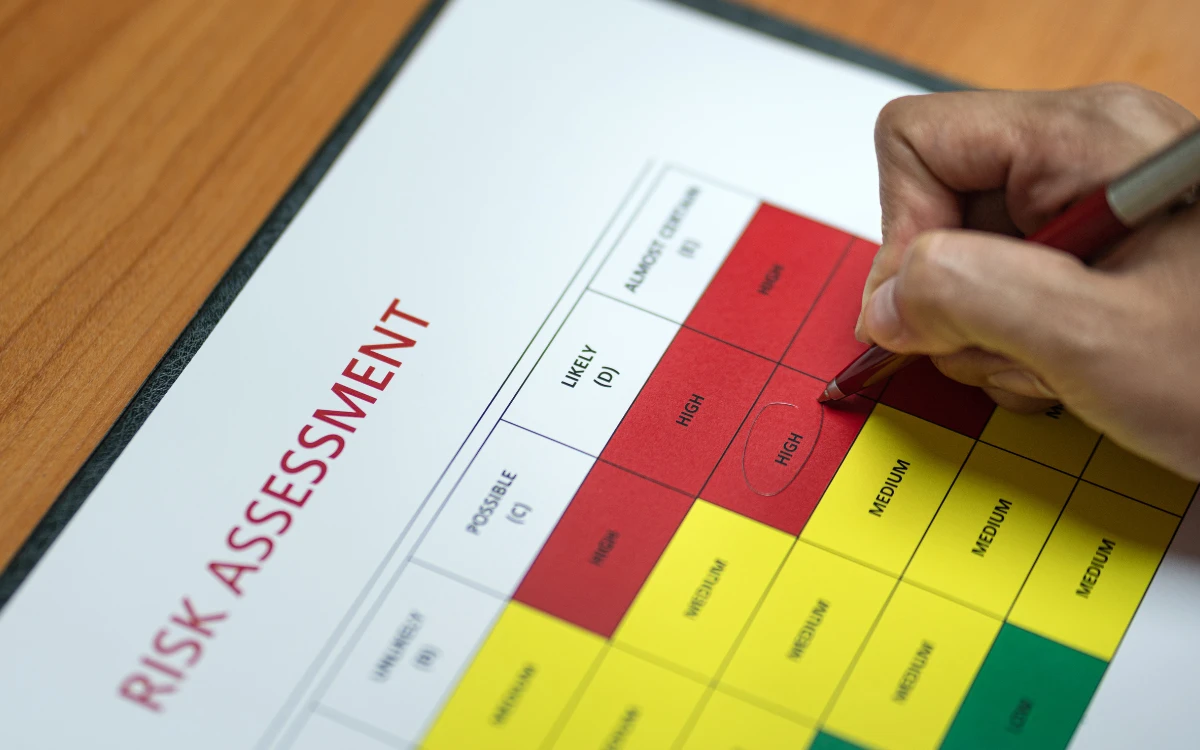
An HR risk assessment checklist is a structured framework used to identify, evaluate, and control workforce-related risks that affect legal compliance, employee management, workplace policies, and organisational performance. It helps HR teams review critical areas before risks become operational problems.
Human resources risk assessment focuses on analysing how people-related decisions, processes, and systems impact an organisation. It connects HR activities with compliance requirements, employee experience, and business continuity.
Organisations use HR risk assessments to review areas such as employment practices, workplace policies, employee records, performance management, training systems, and internal procedures.
A strong assessment does not only identify problems. It creates a process for understanding risk levels and selecting suitable improvement actions.
Many HR risks develop because organisations rely on outdated policies, inconsistent management practices, or unclear employee procedures. These gaps affect employee relations, productivity, and regulatory compliance.
Before building an assessment framework, HR professionals need a clear understanding of policy structure and documentation requirements. A useful starting point is learning how to write HR policies because effective policies create the foundation for reducing workforce risks.
How does HR risk assessment connect with HR policy development?
HR risk assessment and HR policy development work together because policies define expected workplace behaviour while risk assessments identify gaps between current practices and required standards. Both processes support consistent HR decision-making.
HR policies provide employees and managers with clear guidance about workplace expectations. They explain procedures related to recruitment, attendance, conduct, performance, equality, health and safety, and employee responsibilities.
An HR risk assessment reviews whether these policies are complete, updated, and applied correctly across the organisation.
For example, an organisation may have an employee handbook, but an assessment can reveal missing procedures for remote working, data protection, disciplinary actions, or workplace investigations.
This connection makes HR policy review an important part of compliance management.
Organisations that regularly assess HR risks create stronger systems because they identify weaknesses before they affect employees or business operations.
For professionals developing stronger policy knowledge, understanding the complete process of policy creation is essential. The article How to Write HR Policies: Structure, Templates and Examples explains how orTraining Courses In Human Resources Training Course organisations develop effective HR documentation and policy frameworks.
What areas should an HR risk assessment checklist evaluate?
An effective HR risk assessment checklist evaluates compliance areas including employment practices, employee documentation, workplace policies, training systems, data management, performance processes, and organisational culture. These areas represent the main sources of workforce-related risks.
HR teams usually begin assessments by reviewing employment compliance. This includes checking contracts, employee classifications, recruitment procedures, and legal documentation.
Incorrect employment records create significant risks because they affect employee rights, organisational accountability, and regulatory responsibilities.
The second area focuses on workplace policies. HR teams examine whether policies reflect current business operations and legal expectations.
Policies related to harassment prevention, equal opportunities, leave management, disciplinary procedures, and grievance handling require regular evaluation.
Employee data management is another important assessment area. HR departments manage sensitive information, including employee records, payroll details, performance information, and personal documents.
A risk assessment checks whether data handling procedures follow internal controls and privacy requirements.
Training and development systems also require evaluation. Organisations assess whether employees and managers receive appropriate training for their roles.
Weak training systems create capability gaps that increase operational and compliance risks.
How can organisations identify compliance risks in human resources?
Organisations identify HR compliance risks by reviewing policies, analysing employee processes, checking documentation accuracy, evaluating management practices, and measuring alignment with workplace regulations and internal standards.
The first step is collecting information about current HR practices.
HR teams review employee files, contracts, policy documents, training records, and workplace procedures.
This information provides evidence about existing compliance conditions.
The next step involves comparing current practices against required standards.
For example, an organisation reviews whether recruitment procedures follow fair hiring principles or whether performance reviews follow consistent evaluation methods.
Managers also provide valuable information during risk assessments because they experience workplace processes daily.
Their feedback highlights practical issues that documents alone cannot show.
After identifying risks, HR teams classify them according to impact and urgency.
A missing employee policy creates a different level of risk compared with incomplete training records. Prioritisation helps organisations focus resources on areas requiring immediate improvement.
What compliance areas should HR professionals review regularly?
HR professionals should regularly review employment contracts, workplace policies, employee relations procedures, training records, performance management systems, and HR technology processes to maintain compliance and reduce operational risks.
Employment contracts represent one of the most important compliance areas.
HR teams review whether contracts contain accurate job responsibilities, employment conditions, and updated organisational requirements.
Recruitment processes also require regular assessment.
Organisations evaluate whether hiring procedures are consistent, documented, and aligned with internal standards.
Employee onboarding is another critical area because it establishes the relationship between employees and the organisation.
Effective onboarding reduces confusion and improves understanding of workplace expectations.
Performance management systems require continuous review because unclear evaluation processes create employee dissatisfaction and inconsistent decisions.
HR teams assess whether managers receive guidance on conducting reviews, setting objectives, and providing feedback.
Training records provide evidence of workforce capability development.
Organisations track whether employees complete mandatory learning activities and whether training addresses current business needs.
How do HR risk assessments support better compliance decisions?
HR risk assessments support better compliance decisions by providing evidence-based insights into workforce weaknesses, allowing organisations to improve policies, strengthen processes, and allocate training resources where they create the greatest impact.
HR decisions become more effective when they are based on measurable information.
Instead of responding to problems after they occur, organisations use assessments to identify potential challenges early.
For example, a risk assessment may reveal that managers lack knowledge about employee disciplinary procedures.
The organisation then introduces targeted manager training to improve decision quality.
This approach connects HR development with business outcomes.
HR teams measure improvements through indicators such as reduced employee complaints, improved policy awareness, faster onboarding completion, and stronger compliance reporting.
These measurements demonstrate the business value of HR improvement initiatives.
A structured assessment also improves communication between HR departments and senior leadership.
Executives gain clearer visibility into workforce risks and understand where investment in people development creates operational benefits.
What methods can HR teams use to evaluate workplace compliance risks?
HR teams evaluate workplace compliance risks through document reviews, employee surveys, management interviews, compliance audits, process analysis, and HR technology reviews. Each method provides different information about workforce conditions.
Document reviews examine whether HR policies, procedures, and records remain accurate.
This method identifies missing information, outdated processes, and inconsistent documentation.
Employee surveys provide insight into workplace experiences.
They help organisations understand whether employees recognise policies and follow expected procedures.
Management interviews reveal operational challenges.
Managers explain where processes create difficulties and where additional guidance is required.
Compliance audits provide a structured review of HR practices.
They compare organisational processes against established standards and highlight areas requiring improvement.
HR technology reviews focus on digital systems.
Modern organisations use HR software to manage employee information, performance tracking, recruitment, and reporting.
An assessment checks whether these systems support accurate data management and efficient HR operations.
How do organisations prioritise risks after completing an HR assessment?
Organisations prioritise HR risks by analysing their potential impact, frequency, compliance importance, and effect on business performance. This allows HR teams to focus improvement efforts on the areas with the highest organisational value.
Not every HR risk requires immediate action.
Some risks affect daily operations, while others create long-term challenges.
HR teams evaluate risks based on their potential consequences.
A compliance gap affecting employee rights receives higher priority than a minor administrative issue.
Risk prioritisation also considers organisational objectives.
A company expanding into new markets reviews employment policies, workforce capability, and management processes before growth activities begin.
This ensures HR systems support business expansion.
After prioritisation, organisations create improvement plans.
These plans define required actions, responsible stakeholders, timelines, and measurement methods.
A clear improvement process transforms risk assessment findings into practical workplace improvements.
How does HR training improve compliance risk management?
HR training improves compliance risk management by developing employee knowledge, strengthening manager capability, improving policy implementation, and creating consistent workplace practices across the organisation.
Training provides the skills required to manage HR responsibilities effectively.
HR professionals learn how to evaluate policies, identify risks, manage employee relations, and support compliance objectives.
Managers also require training because they apply many HR processes directly.
A manager who understands workplace policies makes better decisions regarding performance issues, employee communication, and team management.
Different learning delivery models support different organisational needs.
Classroom workshops provide interactive discussions and practical exercises.
Online learning provides flexibility for distributed teams.
Hybrid training combines digital learning with live sessions to create a balanced development approach.
When organisations evaluate structured solutions for improving HR compliance capability, they often explore professional learning options such as What You'll Learn in BATD's HR Compliance and Policy Writing Training Course to understand how specialised training approaches support HR teams.
Explore More Expert Insights:
Career Pivot Roadmap: How to Change Direction Without Starting Over
Choosing HRIS Software: Training Your Team Before the Rollout
How should organisations select the right HR compliance training approach?
Organisations should select HR compliance training based on workforce needs, skill gaps, learning objectives, delivery methods, and measurable performance outcomes rather than selecting training only by topic name.
The first consideration is the organisation’s current capability level.
New HR professionals require foundational knowledge about policies, documentation, and compliance processes.
Experienced HR teams require advanced approaches focused on strategic risk management and organisational improvement.
The second consideration is practical application.
Effective training connects concepts with workplace situations.
Participants should understand how to analyse risks, improve policies, and support managers.
The third consideration is measurement.
Organisations evaluate training success through indicators such as improved policy understanding, reduced compliance issues, faster process completion, and stronger HR reporting.
Professional development programmes focused on workforce capability provide structured learning pathways. Training Courses In Human Resources Training Courses support HR professionals and organisations developing practical knowledge in employee management, HR processes, and workplace improvement strategies.
Why is continuous HR risk assessment important for future workplace challenges?
Continuous HR risk assessment helps organisations adapt to changing workplace requirements by identifying new compliance challenges, improving HR systems, and maintaining effective workforce management practices.
Workplaces continue to change because of digital transformation, flexible working models, evolving employee expectations, and new business structures.
HR systems must develop alongside these changes.
A checklist that remains unchanged becomes ineffective over time.
Regular assessments ensure that policies, training programmes, and HR processes continue supporting organisational goals.
Future-focused HR departments use risk assessment as an ongoing improvement system.
They connect workforce analysis with learning strategies, technology improvements, and leadership development.
This approach creates stronger organisational resilience.
HR risk assessment is not only a compliance activity. It is a decision-making framework that helps organisations understand workforce challenges and improve how people systems operate.