
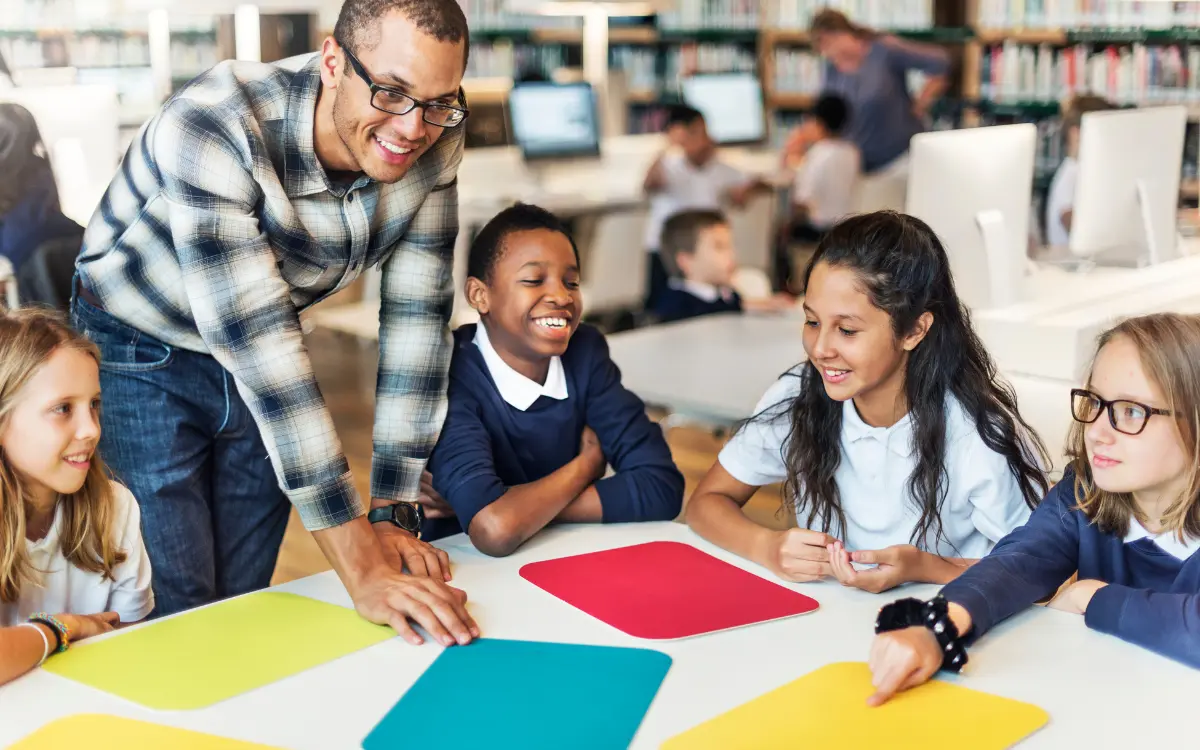
Managing behaviour in a special education setting requires a unique, compassionate, and well-structured approach. It involves a lot of affectionate appreciation and a good structure to follow. These individuals with special needs have trouble communicating and regulating their emotions, and the social stuff could easily lead to behavioural disruptiveness.
Such behaviour will be greatly enhanced by the teachers' effort under specific strategies developed in his or her learning environment. This article seeks to provide nine behaviour management strategies for special education, focusing on academic development for emotional growth.
1. Establishing Meaningful Relationships
Creating a connection with your students not only will help you to know your students, but it will also help your students connect with you. The more value in the relationship, the more you will know what thoughts they have and why they act the way they do. A great way to do this is to greet your students and ask them how they are doing in the morning and address anything that might be bothering them that could come into play later in the day.
I would hope that educators would also check on students in special programmes so they can stay focused and find a way to be motivated throughout the day. If you are a school counsellor or a special education director, school psychologist or behaviour specialist, why not check out one of the free monthly webinars on how to manage student behaviour?
These webinars cover the most effective ways to deal with parents of frustrated students, how to identify behaviours and more. The British Academy for Training and Development has an extensive Global Challenges Related to Mental Health course, providing educators and individuals with insight into the behavioural, emotional, and psychological issues affecting students around the world.
2. Use Positive Language
Negative language reinforces the target behaviours. Children, in general, often want to do what they are not allowed to do. Thus, you will not provoke a vicious cycle of behavioural issues by using positive language. For example, you say, "Stop throwing those paper aeroplanes," versus saying, "Can we all focus and pay attention, please?"
This will be viewed as a sign of respect for the student that will indirectly lead to better behaviour. Mainly, this kind of language encourages positive self-talk. Instead of saying, "This work is too hard for me," they will start to say, "I can try my best." Equally important is your body language. Smile more and frown less. Be the model of the behaviour you want to see in your students. Research shows that students learn from the language and behaviour of the teachers.
Some of the outcomes of positive language approaches include:
A safe learning environmentA sense of responsibilitySelf-disciplineSelf-motivation3. Develop a Relationship With Your Students
Get to know the students one by one. Spend time finding out what they like and dislike. It is easier to engage students when classes are based on their preferences. Also, knowing your students helps you see some triggers of behavioural problems. For example, suddenly a student may start to lash out and talk over you during a lesson; this usually indicates that the child may be going through some issues at home or bullying at school.
Knowing some things about the child can help trace the cause of what is happening. Rather than punishing the behaviour, you can talk to the student about it and direct them for help, like getting to see the school counsellor. Another way to build a strong rapport with almost any class is by speaking positively about them in front of their parents and school administrators.
Use notes or the phone to maintain parental contact regarding these students' positive behavioural changes. You might want to have the principal or a senior administrator stop by to comment on their effective behaviour. With these actions, students will more likely realise that you are on their side and continue to improve.
4. Schedule a break
No matter how young or old, students are always hunting for an excuse to break from their schoolwork, whether it be for a bathroom break or going to drink a glass of water. Special education classrooms, however, are no different. Scheduling in breaks can actually help students with special needs focus better throughout the day.
Too much work creates undue stress, which may lead to an emotional outburst. And it has the capacity of making students distracted from whatever they are working on, now making them retain less information. When a break is implemented, the teacher should provide some general parameters.
For one, a timer should be set for the break so that after the appointed time, the student must get back to work. During the break, the student could also be directed to a specific break area. The break time is a privilege and has to be given as such when a student refuses to return to work or misbehaves.
5. Implement a behaviour intervention plan (BIP).
A behaviour intervention plan (BIP) is a document that describes the student’s challenging behaviour, its function, and strategies for addressing this behaviour. The BIP should be developed in collaboration with the student, parents, and other staff. The student’s progress should be tracked and the changes made to the BIP as needed.
Managing a child's behaviour is an important component of teaching in special education settings. When you manage behaviour proactively with research-based practice, you provide opportunities for your students to succeed, as well as have a learning space that is as inclusive as possible.
6. Make Lessons Engaging
Consider being stuck in a meeting where the facilitator just drones on for hours. When that happens, you probably start playing with your keys or zone out in the middle of the meeting. That's how the children feel when lessons are not engaging. Classes can get boring quickly! Boring classes will only lead to behaviour issues. To eliminate behaviour problems, make your classroom activities as engaging and interesting as possible.
Use the activities to engage and promote the students remembering throughout the lesson. Aim to have the students discover the knowledge through hands-on activities. At the end of the day, it is all about variety in the presentation of the information, using a range of aids and making the work interactive and as much fun as possible.
You can gain the attention of younger students by using games, paired with using plenty of movement when learning is taking place. Stay relevant when working with older students. Think of modern, cool, well-known music and movies.
7. Classroom Seating Options
Another method of classroom management is to provide plenty of seating options. When students are allowed to sit wherever they want, they’re three times more likely to become disruptive than when assigned seating. However, giving students some level of freedom with certain expectations can reduce anxiety and boost academic performance.
Let them sit on couches or rugs as long as they do their work. Invest in some special needs seating to create a more optimal work environment. If a student can’t do their work, move them back to a desk until they do better.
8. Social Skills Training
Social skills are a common area of difficulty for many students with special education needs. Behavioural problems sometimes point to the youngster having difficulties connecting or communicating correctly. Through roleplay, modelling, and feedback learners require, social skills training enables them to engage favourably with other people.
Rather than treating social skills training, it is simpler and more efficient to integrate these learning opportunities into our normal school schedules. Real-time learning enables students in general to generalise social abilities across contexts, reducing irritation and frustration actions.
9. Self-regulation resources and calming techniques
In special education, it's important to help students learn coping strategies and how to self-regulate their emotions. Many self-regulatory tools, including sensory breaks, breathing exercises, and emotion cards, offer students choices when feelings or conduct are beginning to get out of hand.
Many schools have calming rooms or sensory rooms ready for students to go to when they are overburdened or require a sensory break. These locations are designed for special students to become less sensitive to the overstimulations and learn self-regulating techniques so that they know how to reset before going back to class exercises.
Why Behaviour Management in Special Education Matters
Behaviour management is more than simply reducing disruptions; it is about providing each student with an environment that is safe, supportive, and understanding in order to promote the successful development of both character and academics. When students feel safe, understood, and supported, a better academic and emotional outcome can prevail.
Behavioural strategies promote self-control, personal responsibility, and constructive resolution skills. These skills are valuable to help students become independent and eventually acclimate into society, both during school and beyond.
Setting Students Up for Success
All students with special needs should have the opportunity to experience success in their academic and social endeavours. Behaviour management is not about punishment; it is primarily concerned with teaching, supporting, and guiding students to achieve successful outcomes. By implementing the nine key strategies, teachers can enable structure and further assist student success in future endeavours.