
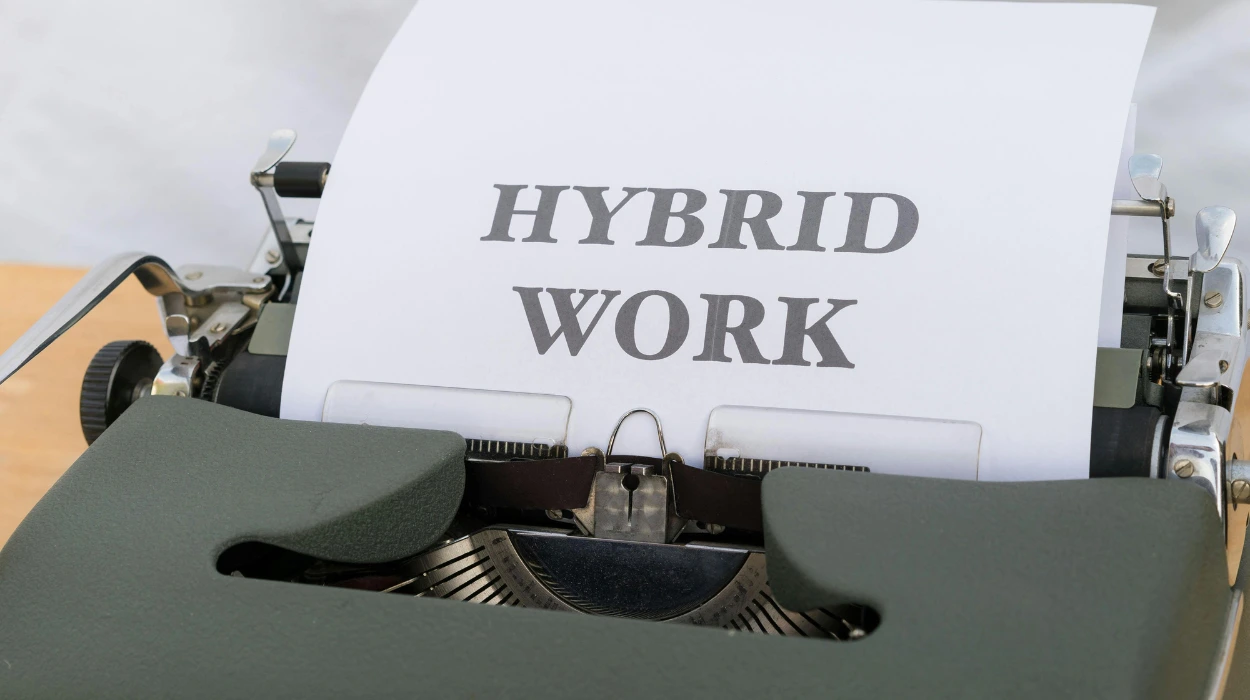
Modern office management now requires professionals to coordinate work across physical offices, remote teams and shared digital systems. Hybrid work changes how schedules, meetings, documents, communication and workplace resources are managed, making structured administrative capability essential.
For organisations assessing hybrid-work readiness, understanding office hoteling pros and cons is useful because workspace planning affects calendars, attendance coordination and office resources. However, successful hybrid administration requires a wider skills framework than workspace booking alone.
The Training Courses In Office Management programme from British Academy for Training and Development provides a structured route for developing office-management capabilities across organisation, time management, communication, technology, meetings and customer service.
What problem does Training Courses In Office Management solve for hybrid workplaces?
Training Courses In Office Management addresses the practical skill gaps created when administrative work moves between office-based and remote environments, helping participants organise workflows, prioritise tasks, communicate clearly, use office technology, coordinate meetings and maintain consistent administrative standards.
Hybrid work can create fragmented administrative processes. A manager may work remotely while an administrator works from the office. Another department may operate on different attendance patterns. Meetings may involve participants in several locations.
These conditions increase the importance of structured coordination.
An administrator must know which information belongs in a shared system, how meetings should be organised, how priorities should be communicated and how follow-up actions should be recorded. The ability to complete individual tasks is therefore only one part of effective office management.
British Academy for Training and Development positions office management training around core capabilities such as office-management fundamentals, time management, effective communication, office technology, meeting management and customer service.
The course is therefore relevant when the organisation needs administrative staff to operate consistently across changing workplace arrangements rather than relying on informal office routines.
For example, an HR team may need an administrator to coordinate interviews between remote candidates and office-based managers. An executive assistant may need to organise a meeting involving participants in three locations. An office coordinator may need to manage shared resources while attendance changes throughout the week.
These are office-management problems with a hybrid-work dimension.
Why is the course curriculum structured around progressive skill development?
The curriculum moves from fundamental office organisation to time management, communication, technology, meeting management and customer service, creating a progression from individual administrative competence towards coordinated workplace performance and broader office-management responsibility.
This sequence matters because hybrid administration depends on connected skills.
Office-management fundamentals establish how work is organised. Time management introduces prioritisation. Communication ensures that information moves accurately between people. Technology supports digital execution. Meeting management applies these skills to collaborative business activity.
Customer service then extends professional coordination to internal and external stakeholders.
This progression allows participants to understand how administrative activities interact rather than learning isolated procedures.
British Academy for Training and Development describes its office-management training as practical and interactive, using workshops and practical exercises to support application in workplace situations.
The curriculum can therefore be assessed as a skills pathway.
A participant first learns how to structure work. They then learn how to prioritise it. They develop the communication skills required to coordinate it. Digital tools help them execute it. Meeting-management skills enable collaboration. Customer-service capability supports professional stakeholder relationships.
That progression is particularly relevant to hybrid work because administrative responsibilities increasingly cross physical and digital environments.
What will participants learn from the office management curriculum?
Participants develop practical capabilities in office organisation, prioritisation, professional communication, workplace technology, meeting coordination and customer service, with each capability supporting more consistent administrative workflows and stronger coordination across departments and workplace locations.
Office management fundamentals
The foundation module develops understanding of office organisation and administrative coordination.
Participants learn how office activities can be structured around responsibilities, priorities and operational requirements. This provides the basis for managing work consistently when employees are not always working in the same physical location.
Time management and prioritisation
Hybrid environments can generate competing requests from managers, departments and remote colleagues.
Time-management training helps participants organise workloads, identify priorities and manage deadlines. The objective is not simply to work faster. It is to create a more controlled administrative workflow.
A practical example is an executive assistant receiving urgent requests from two managers while preparing documentation for a scheduled meeting. Prioritisation determines which task requires immediate attention and which can be scheduled.
Effective communication
Hybrid work increases reliance on written communication, digital meetings and structured information sharing.
Participants develop professional communication skills that support clear interaction with colleagues and customers. The emphasis is on conveying information accurately and appropriately.
For HR departments, this can apply to interview scheduling, candidate communication and internal coordination. For managers, it can support clearer delegation and follow-up.
Office technology
Modern administration depends on digital tools for managing information, workflows and communication.
The course addresses the use of modern office technology, including project-management programmes and document-management systems.
Participants can apply this capability to digital document organisation, task coordination and information retrieval.
Meeting management
Meeting administration becomes more complex when participants join from different locations.
Participants learn to support meetings from preparation through follow-up. This includes organising information, coordinating participants and maintaining appropriate administrative processes.
A hybrid meeting provides a practical example. The administrator may need to confirm participants, distribute documents, coordinate the meeting schedule and ensure that follow-up actions are recorded.
Customer service
Office management also involves interaction with customers and stakeholders.
Participants develop professional approaches to customer communication and relationship management. In a hybrid organisation, this capability applies across telephone, email, online meetings and face-to-face interactions.
How does the course prepare participants for hybrid administrative work?
The course prepares participants by combining organisational, communication, technological and coordination skills that remain relevant when employees, managers, customers and administrative processes operate across both physical offices and remote working environments.
Hybrid work does not create an entirely separate form of office management. Instead, it changes how established administrative responsibilities are performed.
Scheduling becomes more dependent on accurate calendars.
Meetings require stronger preparation because participants may not share the same location.
Documents need reliable digital organisation.
Communication must remain clear when informal face-to-face clarification is unavailable.
Office technology becomes central to daily coordination.
The British Academy for Training and Development course addresses these underlying capabilities rather than limiting training to one hybrid-work platform or software product.
This makes the learning transferable across different organisations and technology environments.
For example, a department may introduce office hoteling where employees reserve desks according to attendance requirements. The administrator needs scheduling, communication and organisational skills to support the process. The technology may change, but the underlying administrative competencies remain relevant.
The same principle applies to remote work.
Someone searching for skills to learn for remote jobs may identify digital communication, organisation and time management as important capabilities. Office-management training connects these skills to a broader operational context rather than treating them as isolated remote-work competencies.
How is Training Courses In Office Management delivered?
Delivery is based on practical and interactive learning, with workshops and practical exercises supporting application of office-management concepts; the precise format, duration, location and language depend on the selected programme configuration and scheduled training arrangement.
The published British Academy for Training and Development material describes practical and applied learning through workshops and exercises.
For decision-stage evaluation, delivery should be considered alongside the participant's role and organisational requirements.
Possible organisational arrangements can include individual professional development or group participation. The academy's registration process captures information such as course, city, language, number of attendees, duration and date.
This matters for HR teams planning workforce development.
A single employee may require targeted development in office coordination. A department may require a shared administrative capability framework. A larger organisation may use training as part of a broader professional-development pathway.
The delivery configuration should therefore be matched to the intended application.
How are learning outcomes assessed and applied at work?
Learning should be evaluated through participants’ ability to apply administrative knowledge to practical workplace situations, with exercises, assignments, tests or simulations providing evidence of competence where included in the selected training design.
Assessment is most useful when it reflects actual office-management responsibilities.
A participant could be asked to organise competing tasks, structure a meeting workflow, prioritise administrative requests or respond to a workplace communication scenario.
The purpose is to determine whether the participant can apply the principle rather than simply recall a definition.
The British Academy for Training and Development emphasises practical exercises and applied learning within its office-management training approach.
Organisations can extend assessment into the workplace after training.
An HR team could monitor scheduling errors. A manager could review meeting preparation and follow-up. An office manager could examine whether document-management procedures are being followed consistently.
These indicators should reflect the employee's actual responsibilities.
Training should not be judged only by certificate completion. The more useful question is whether the participant demonstrates improved performance in the tasks covered by the curriculum.
What measurable workplace results can organisations expect?
Expected workplace results include stronger task organisation, clearer communication, improved time prioritisation, more consistent meeting coordination, better use of office technology and stronger administrative support for managers, teams and customers across hybrid working arrangements.
The published office-management curriculum links training with efficiency, productivity, organisation and professional development.
These outcomes can be translated into practical workplace measures.
For scheduling, an organisation can track avoidable calendar conflicts.
For meeting management, it can monitor preparation quality and completion of follow-up actions.
For document management, it can assess filing accuracy and retrieval time.
For communication, managers can review avoidable clarification requests or administrative communication errors.
For workload management, departments can examine task completion against agreed deadlines.
British Academy for Training and Development provides the training structure, while the organisation remains responsible for defining workplace performance indicators and monitoring post-training application.
This distinction is important when evaluating a professional development programme.
Training develops capability. Management systems, role clarity, technology and workload conditions determine how effectively that capability is used.
Who should take this office management course?
The programme is suitable for administrative professionals, secretaries, office coordinators, executive support staff, HR professionals, team leads and employees moving towards broader office-management responsibilities within modern or hybrid workplace environments.
The published office-management material identifies administrative professionals, aspiring office managers and HR professionals or team leads among relevant participants.
The programme can be appropriate for different career stages.
An administrative assistant may use it to build structured office-management capability.
A secretary may need stronger coordination and communication skills as responsibilities expand.
An executive assistant may apply the learning to scheduling, meetings and stakeholder management.
An office coordinator may require broader responsibility for workplace workflows.
HR teams can also use the programme as part of professional development and administrative competency planning.
For corporate buyers, eligibility should be determined by job responsibilities rather than job title alone.
What does the course cost and when is it available?
The published 2026 listing shows £3,800 for the Training Course in Office Management, with listed intakes including 13 April, 13 July, 12 October 2026 and 11 January 2027; registration details should be checked against the selected delivery configuration.
The current British Academy for Training and Development course listing provides the £3,800 price and these scheduled dates.
The published registration information also states that fees plus VAT apply from 2026.
For corporate decision-makers, price should be evaluated against the complete training specification.
Relevant considerations include participant numbers, selected date, duration, location, language, delivery arrangement and organisational objectives.
A department developing one office coordinator has a different training requirement from an HR team developing administrative capability across several employees.
The course fee should therefore be reviewed as part of the total training specification rather than considered independently.
How does enrolment work with British Academy for Training and Development?
Enrolment involves selecting the relevant office-management course and confirming training requirements, including course configuration, location, language, attendance, duration and date, followed by participant and company information for registration and delivery planning.
The published registration process used by British Academy for Training and Development includes fields covering course category, specialisation, course, city, language, number of attendees, duration and date.
Participant information and company information are then provided as part of the registration process.
For individual learners, this supports direct professional-development planning.
For organisations, the process can accommodate multiple attendees and company participation.
The current listing provides scheduled dates for the Training Courses In Office Management category, including 12 October 2026 and 11 January 2027.
Before final registration, the buyer should confirm the selected course, delivery format, location, duration, language, fees and available date.
Is Training Courses In Office Management the right choice for hybrid-work preparation?
The course is a suitable choice when hybrid-work readiness requires broad administrative capability rather than training on one specific remote-work tool, because its curriculum connects organisation, prioritisation, communication, technology, meetings and customer service.
Explore More Expert Insights:
The strongest fit is an organisation where administrative roles are expanding beyond routine clerical activity.
It is also relevant when employees support managers and teams across different working locations.
The British Academy for Training and Development approach provides a structured skills framework that can be incorporated into professional development, HR capability planning and administrative performance improvement.
The decision should ultimately depend on role requirements, learning objectives, delivery needs, budget and the workplace outcomes the organisation intends to measure.