
Corrosion prevention in oil and gas depends on controlling the interaction between materials, fluids, contaminants, temperature, pressure, and operating environments. Coatings, corrosion inhibitors, and cathodic protection represent three established approaches. Each method controls corrosion through a different mechanism and fits different asset conditions, exposure environments, and maintenance strategies.
Corrosion becomes an operational issue when material degradation affects equipment integrity, production continuity, inspection requirements, or maintenance planning. A useful foundation is the broader explanation of Corrosion in oil and gas, including its causes, costs and consequences. That context helps organisations evaluate prevention methods according to the actual corrosion mechanism rather than selecting a treatment based only on general industry practice.
For organisations developing workforce capability around these decisions, Oil and Gas Training Courses provide a broader learning framework for understanding asset integrity, operational risks, technical controls, and workplace application. The relevant learning approach depends on whether employees need basic awareness, technical competence, inspection capability, or decision-making skills.
What are the main corrosion prevention methods used in oil and gas?
The main prevention methods are protective coatings, corrosion inhibitors, and cathodic protection. Each method interrupts corrosion through a different mechanism, so selection depends on material, exposure, operating conditions, accessibility, inspection requirements, and asset design.
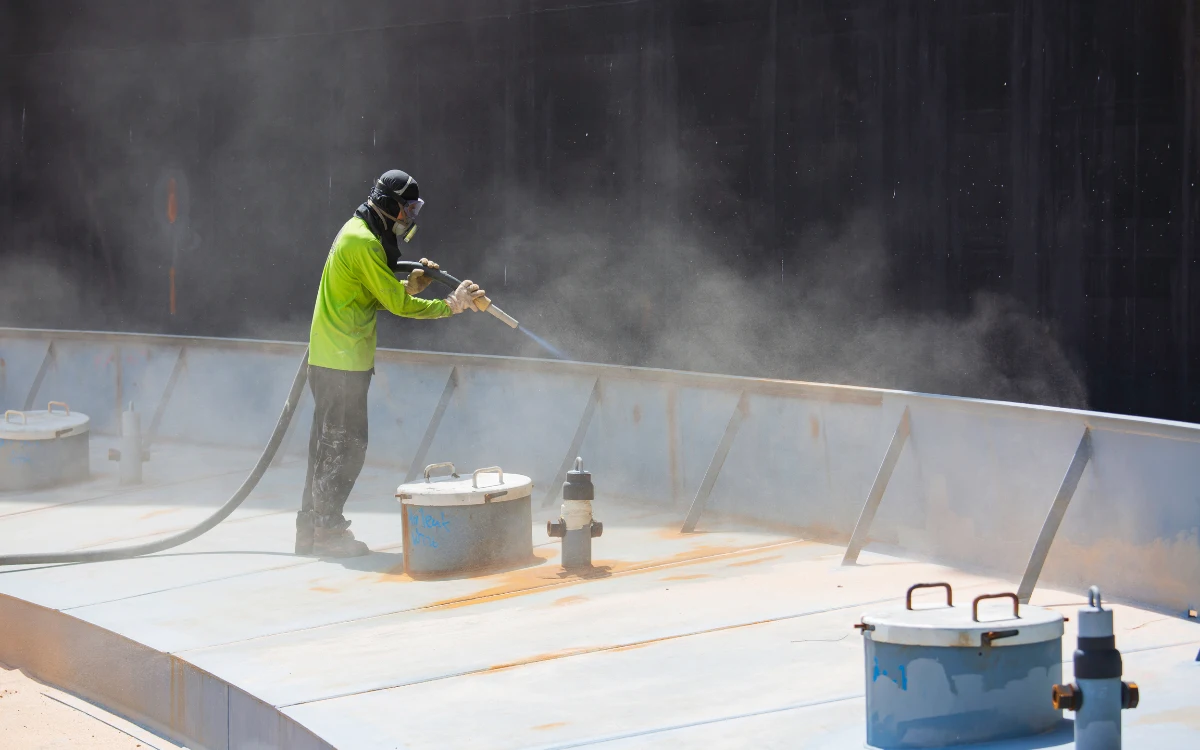
Protective coatings create a physical barrier between the metal surface and the corrosive environment. The coating prevents water, oxygen, salts, chemicals, and other corrosive agents from reaching the substrate. Common applications include pipelines, storage tanks, structural steel, vessels, and external surfaces of process equipment.
Corrosion inhibitors work differently. They are chemical substances introduced into a process stream to reduce the corrosion reaction at the metal surface. They are particularly relevant where internal corrosion occurs in pipelines, production systems, vessels, and other equipment containing corrosive fluids.
Cathodic protection changes the electrochemical behaviour of the protected metal. It reduces the tendency of the metal to act as an anode and lose material through oxidation. The technique is widely associated with buried pipelines, offshore structures, storage tanks, and other metallic assets exposed to electrolytes.
These methods are not interchangeable. A coating addresses surface exposure. An inhibitor addresses the chemical environment. Cathodic protection addresses the electrochemical reaction. Effective corrosion control in the oil and gas industry therefore begins with understanding the corrosion mechanism and asset conditions.
How do protective coatings prevent corrosion?
Protective coatings prevent corrosion by separating metal surfaces from water, oxygen, salts, chemicals, and other corrosive agents. Their effectiveness depends on surface preparation, coating selection, application quality, environmental exposure, inspection, and maintenance throughout the asset lifecycle.
Coating systems normally contain several layers designed for specific functions. A primer provides adhesion and corrosion resistance. Intermediate layers provide thickness and barrier protection. A topcoat provides environmental resistance and protects the underlying layers from weathering, chemicals, ultraviolet exposure, or mechanical damage.
Surface preparation has a direct effect on coating performance. Contaminants, rust, moisture, salts, oil, and poorly prepared surfaces reduce adhesion and create conditions for premature coating failure. Industrial coating programmes therefore connect preparation standards with application controls and inspection.
The operating environment also determines coating selection. An external pipeline exposed to soil requires different protection from an offshore structure exposed to seawater. A process vessel containing hydrocarbons and chemicals presents different internal conditions from a storage tank exposed primarily to atmospheric moisture.
Coating inspection focuses on measurable characteristics. Dry film thickness, adhesion, surface cleanliness, coating continuity, curing conditions, and defect identification provide practical indicators of application quality. Organisations also assess blistering, cracking, delamination, underfilm corrosion, and mechanical damage during inspection activities.
Coatings provide strong preventive value when their condition remains controlled. Their limitation is that physical damage, coating breakdown, poor preparation, and environmental exposure create pathways for corrosion. Maintenance teams therefore treat coating protection as a lifecycle activity rather than a one-time application.
How do corrosion inhibitors control corrosion?
Corrosion inhibitors control corrosion by changing the electrochemical or chemical conditions at the metal surface. Their performance depends on correct chemical selection, dosage control, fluid composition, temperature, flow conditions, residence time, monitoring, and continuous operational management.
Inhibitors are commonly used in systems where corrosive fluids contact internal metal surfaces. Oil and gas production streams often contain water, carbon dioxide, hydrogen sulphide, organic acids, salts, and other constituents that contribute to corrosion.
An inhibitor forms a protective effect at the metal surface or changes the corrosion reaction. Different inhibitor chemistries target different environments. Selection therefore requires technical knowledge of the fluid composition and corrosion mechanism.
Dosage is an important operational variable. Insufficient chemical treatment fails to provide the required protection. Excessive dosing creates unnecessary chemical consumption and operational cost. Effective programmes establish treatment rates through engineering assessment, monitoring, testing, and performance review.
Inhibitor programmes also require chemical compatibility. The selected treatment needs to function within the production system without creating unacceptable effects on separation, processing, water treatment, downstream operations, or other chemicals used within the facility.
Monitoring provides evidence that the treatment is working. Organisations use corrosion probes, coupons, sampling, inspection data, chemical consumption records, and corrosion-rate measurements to assess performance. These indicators connect chemical treatment with actual asset condition.
The learning requirement is therefore broader than knowing the definition of an inhibitor. Personnel need to understand why a treatment is selected, how dosage is controlled, which operational conditions affect performance, and how inspection data confirms effectiveness.
How does cathodic protection work in oil and gas assets?
Cathodic protection reduces corrosion by controlling the electrochemical potential of a metallic structure. It uses sacrificial anodes or impressed current systems to reduce anodic metal loss in suitable conductive environments such as soil, seawater, and aqueous conditions.
Cathodic protection uses two main approaches. Sacrificial anode systems use a more active metal that corrodes preferentially to protect the target structure. Impressed current systems use an external power source and controlled anodes to provide protective current.
The method is particularly relevant to buried and submerged metallic assets. Pipelines, offshore structures, marine facilities, tank bottoms, and other assets exposed to conductive environments frequently require electrochemical protection.
Cathodic protection requires engineering control and monitoring. Protective potentials need to remain within an appropriate operating range. Excessive protection creates its own technical concerns, while inadequate protection leaves the structure vulnerable to corrosion.
The system also interacts with coatings. A coated pipeline requires less protective current because the coating limits the exposed metal surface. Cathodic protection then addresses defects, discontinuities, or damaged areas where the substrate becomes exposed.
This combination illustrates why oil and gas corrosion prevention is often a layered discipline. One control reduces exposure. Another controls the electrochemical reaction. Inspection confirms whether both controls continue to perform.
How should organisations compare coatings, inhibitors and cathodic protection?
The three methods differ in mechanism, application, monitoring, maintenance, and suitability. Coatings provide barrier protection, inhibitors control corrosive fluids, and cathodic protection controls electrochemical activity. Selection requires an asset-specific assessment rather than a universal preference.
Coatings are strongest where the corrosion threat comes from external exposure or where a physical barrier can be maintained effectively. They require disciplined surface preparation, application, inspection, and repair.
Inhibitors are strongest where internal process fluids create the primary corrosion threat. They require continuous chemical management and operational monitoring. Their performance depends heavily on fluid characteristics and treatment control.
Cathodic protection is strongest where metallic structures operate in conductive environments. It provides electrochemical protection and frequently works alongside coatings rather than replacing them.
The decision therefore depends on the asset rather than the method alone. A buried pipeline can use a coating and cathodic protection together. A production pipeline containing corrosive fluids can require internal inhibitor treatment alongside external coating protection. An offshore structure can combine coating systems with cathodic protection to address different corrosion mechanisms.
This approach reflects modern corrosion control in the oil and gas industry. Prevention is not a single technical activity. It is a coordinated system involving engineering, operations, inspection, maintenance, chemistry, and workforce competence.
When are coatings the most appropriate corrosion prevention option?
Coatings are most appropriate when corrosion results from external environmental exposure and a reliable physical barrier can be maintained. They are particularly valuable for pipelines, tanks, structural steel, vessels, and equipment where surface access supports controlled application and inspection.
The main evaluation question is whether the coating can remain intact under actual operating conditions. Mechanical impact, temperature cycling, chemical exposure, ultraviolet radiation, abrasion, immersion, and moisture affect coating performance.
Accessibility also matters. An accessible above-ground structure allows regular inspection and repair. A buried or submerged asset presents different maintenance constraints. Coating design must therefore consider the complete lifecycle rather than initial application alone.
Workforce capability also affects results. Personnel need competence in surface preparation, coating application, inspection methods, defect recognition, and maintenance requirements. Training reduces the gap between a technically correct coating specification and inconsistent field execution.
For HR and L&D teams, this creates a practical skills-mapping requirement. Coating engineers, inspectors, maintenance technicians, contractors, and supervisors do not require identical knowledge. Learning programmes need to reflect the responsibilities attached to each role.
When are corrosion inhibitors the most appropriate option?
Corrosion inhibitors are most appropriate when corrosive fluids create internal corrosion and chemical treatment can be continuously controlled. They fit production and processing systems where fluid composition, water content, temperature, flow, chemistry, and treatment monitoring directly influence corrosion behaviour.
Internal corrosion often changes with production conditions. Water cut, pressure, temperature, flow velocity, gas composition, chemical contamination, and production chemistry influence the corrosion environment.
This makes inhibitor management an operational discipline. Chemical injection systems need reliable dosing. Sampling and monitoring need defined procedures. Changes in production conditions require technical review.
Training therefore needs to connect corrosion theory with operational decision-making. Employees need to interpret corrosion data, understand treatment objectives, recognise deviations, and communicate findings across engineering, operations, inspection, and maintenance teams.
A strong programme also teaches employees how corrosion control supports business performance. Effective treatment reduces equipment degradation and supports planned maintenance. Poor treatment control increases the risk of inspection findings, repairs, production disruption, and asset integrity concerns.
When is cathodic protection the preferred approach?
Cathodic protection is preferred when metallic assets operate in conductive environments where electrochemical control can reduce anodic corrosion. It is especially relevant to buried pipelines, offshore structures, tank bottoms, and submerged metallic infrastructure.
Cathodic protection becomes particularly valuable where direct coating maintenance is difficult or where coating defects expose small areas of metal.
The system requires technical monitoring. Reference electrodes, potential measurements, rectifiers, anodes, electrical continuity, isolation devices, and interference conditions form part of the wider control system.
Personnel responsible for cathodic protection need specialised competence. They must understand measurement principles, system behaviour, inspection requirements, and the relationship between cathodic protection and coating performance.
Organisations therefore need to distinguish general corrosion awareness from specialist technical capability. A basic awareness programme supports supervisors and non-specialist personnel. Specialist training supports engineers, inspectors, corrosion specialists, and technicians responsible for system performance.
How should companies select the right corrosion prevention strategy?
Companies should select corrosion prevention methods by assessing corrosion mechanism, asset material, exposure environment, operating conditions, accessibility, existing protection, inspection data, maintenance capability, and workforce competence before choosing an individual or combined control strategy.
The first stage is identifying the corrosion mechanism. Uniform corrosion, pitting, galvanic corrosion, erosion-corrosion, microbiologically influenced corrosion, and other mechanisms require different controls.
The second stage is understanding the asset. Material type, design, operating temperature, pressure, fluid composition, location, coating condition, and previous inspection findings establish the technical context.
The third stage is evaluating existing controls. A new prevention method does not automatically replace an existing system. Coatings, inhibitors, cathodic protection, inspection, and monitoring often operate as complementary barriers.
The fourth stage is assessing workforce capability. Organisations need to identify gaps between required technical competence and current employee capability. This assessment supports decisions about classroom learning, practical workshops, technical simulations, workplace coaching, and specialist programmes.
The final stage is measuring performance. Corrosion rate, inspection findings, coating defect frequency, chemical consumption, cathodic protection readings, maintenance costs, equipment availability, and unplanned downtime provide measurable indicators.
At this point, organisations often move from general corrosion awareness towards a structured technical learning solution. A relevant decision-stage resource is Understanding why a dedicated corrosion control course matters for oil and gas operations. That transition is useful when the organisation has identified a workforce capability gap and needs to evaluate how formal training addresses it.
How can organisations measure the effectiveness of corrosion prevention training?
Training effectiveness becomes measurable when organisations connect learning assessments with workplace corrosion KPIs. Relevant measures include technical assessment scores, inspection accuracy, corrosion-rate interpretation, treatment control, reporting quality, corrective-action completion, maintenance costs, and asset availability.
Knowledge assessments measure whether participants understand corrosion mechanisms and prevention principles. Practical assessments evaluate whether employees can apply that knowledge to workplace situations.
Operational KPIs provide stronger evidence of transfer. Inspection accuracy indicates whether personnel identify relevant degradation correctly. Reporting quality shows whether technical findings reach decision-makers in a usable form.
Corrosion-related maintenance costs also provide a business measure. Organisations can compare recurring repair requirements, corrective maintenance, and inspection findings before and after targeted capability development.
Unplanned downtime provides another important indicator. Corrosion prevention supports asset availability when employees identify degradation early and maintain preventive controls effectively.
Training duration alone does not demonstrate effectiveness. A two-day technical programme is valuable only when its learning outcomes connect with defined job responsibilities and measurable operational requirements.
This is why HR teams and technical managers need to evaluate learning delivery as a performance system. Classroom instruction, practical exercises, case-based learning, technical workshops, assessments, and workplace application each serve different learning needs.
What training approach supports effective corrosion control in oil and gas?
Effective corrosion training combines technical theory with asset-based examples, practical interpretation, inspection principles, prevention methods, risk evaluation, and workplace application. The strongest approach connects employee competence with operational responsibilities and measurable asset integrity outcomes.
A general awareness programme introduces corrosion terminology, causes, consequences, and basic prevention concepts. It suits employees who interact with equipment but do not make technical corrosion decisions.
A technical programme provides deeper coverage of corrosion mechanisms, coatings, inhibitors, cathodic protection, monitoring, inspection, and control strategies. It suits engineers, inspectors, maintenance personnel, and technical supervisors.
A practical workshop focuses on application. Participants interpret inspection information, evaluate corrosion scenarios, compare prevention methods, and connect technical findings with operational decisions.
A structured corporate programme also provides assessment. Pre-training assessments establish the existing skills baseline. Post-training assessments measure knowledge development. Workplace evaluation measures whether participants apply the learning correctly.
For organisations evaluating professional development options, the relevant programme should match the identified skills gap. The objective is not simply to increase training attendance. The objective is to improve the technical decisions and behaviours that influence corrosion control.
The British Academy for Training and Development positions professional learning around practical workplace capability, technical development, and measurable business outcomes. Its broader Oil and Gas Training Courses provide a contextual learning route for organisations developing workforce competence across oil and gas operations.
Explore More Expert Insights:
Upstream Oil and Gas Contracts: PSAs, JOAs and Service Agreements
Online Auditing Courses: Internal, External and IT Audit Compared
How should organisations decide between one corrosion method and a combined strategy?
Organisations should use a combined strategy when different corrosion mechanisms or exposure zones require separate controls. Coatings, inhibitors, cathodic protection, inspection, and monitoring work together when each control addresses a defined part of the corrosion risk.
A pipeline illustrates this clearly. External corrosion can require coating and cathodic protection. Internal corrosion can require inhibitor treatment and corrosion monitoring. Inspection verifies the condition of each protection layer.
Storage tanks provide another example. Tank bottoms can require coating and cathodic protection, while external surfaces require appropriate coating systems and environmental protection. Inspection determines whether these controls continue to provide effective protection.
Offshore assets frequently require multiple controls because seawater, atmospheric exposure, mechanical damage, and process conditions create different degradation environments.
The decision is therefore not simply coatings versus inhibitors versus cathodic protection. The more useful question is which combination provides adequate protection for each corrosion mechanism and asset zone.
This method-based evaluation also changes the training requirement. Employees need to understand how individual controls interact. They need to recognise when a coating defect increases dependence on cathodic protection, when changing production chemistry affects inhibitor requirements, and when inspection data signals declining protection.
How can HR and technical managers align corrosion training with operational requirements?
HR and technical managers can align corrosion training with operations by mapping job roles to required competencies, selecting learning formats for each skill level, defining measurable outcomes, and evaluating workplace application through technical and operational performance indicators.
The first requirement is a competency framework. Roles need defined knowledge and skills covering corrosion mechanisms, prevention methods, inspection, monitoring, reporting, and decision-making.
The second requirement is learning-format selection. Awareness learners benefit from structured instruction and industry examples. Technical personnel require deeper engineering content and practical interpretation. Specialists require advanced technical development connected to their responsibilities.
The third requirement is assessment. Training outcomes need measurable indicators. Written assessments measure knowledge. Practical exercises measure application. Workplace KPIs measure operational transfer.
The fourth requirement is continuous development. Corrosion conditions change as assets age, production conditions change, and maintenance strategies evolve. Training therefore works best as part of a wider competency-management system rather than as an isolated event.
For organisations considering corrosion control as a workforce capability issue, the decision should connect technical learning with asset integrity priorities. The most relevant training model is the one that closes an identified skills gap and produces observable improvements in corrosion-related work.