
Organisations using Six Sigma need more than isolated training sessions. They need a structured capability pathway that connects learning levels with process improvement responsibilities. A roadmap from Yellow Belt to Black Belt helps HR teams, managers, and quality leaders match workforce skills to the complexity of improvement projects.
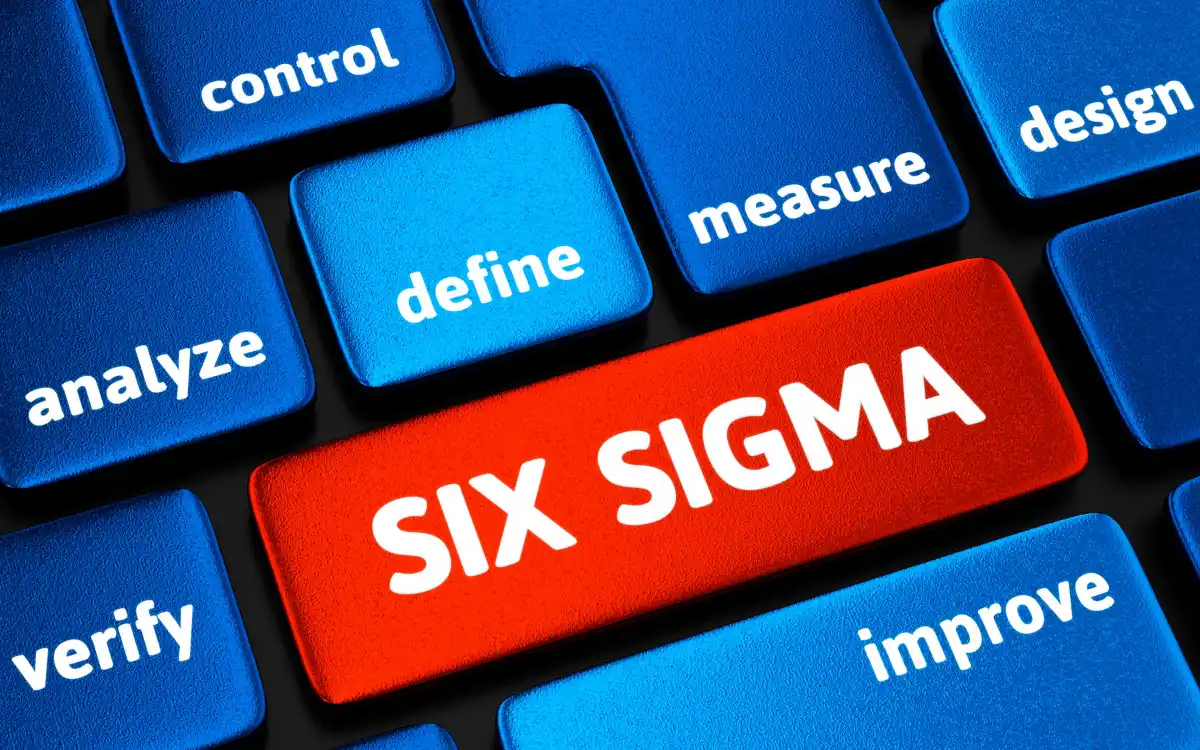
Six Sigma is a structured approach to improving process performance by reducing variation, identifying root causes, and controlling defects. Its implementation commonly follows the DMAIC framework: Define, Measure, Analyse, Improve, and Control. For readers starting with the methodology, this beginner’s guide to DMAIC and Six Sigma the core improvement cycle before moving into role-based capability development.
The progression from Yellow Belt to Black Belt is not simply a sequence of certificates. Each level represents a different depth of analytical knowledge, project responsibility, leadership involvement, and ability to influence process performance. The right roadmap therefore depends on workforce skill gaps, project complexity, organisational maturity, and strategic quality management objectives.
What does the Six Sigma Belt structure mean for implementation?
The Six Sigma Belt structure divides improvement capability into progressive levels, with Yellow Belts supporting projects, Green Belts managing structured improvements, and Black Belts leading complex initiatives using advanced analytical and change-management skills.
The Belt structure creates a common capability language across an organisation. It helps businesses distinguish between employees who understand Six Sigma concepts and employees who can independently manage improvement projects.
Yellow Belt generally represents foundational capability. Employees understand Six Sigma terminology, process variation, basic problem-solving methods, and their role within improvement teams. They typically contribute to projects rather than lead complex initiatives.
Green Belt represents intermediate project capability. Green Belts use DMAIC more independently and apply process measurement, root-cause analysis, statistical techniques, and improvement tools to defined business problems. Their responsibilities often sit alongside their existing operational roles.
Black Belt represents advanced improvement leadership. Black Belts manage complex projects, interpret detailed process data, facilitate cross-functional teams, and connect improvement activity with organisational performance. They often become internal specialists who support broader Six Sigma deployment.
This structure creates a progression from awareness to application and then leadership. HR and L&D teams can therefore use it as a workforce development framework rather than treating Six Sigma certification as a standalone learning event.
How does Yellow Belt fit into a Six Sigma implementation roadmap?
Yellow Belt establishes the foundational knowledge required to participate effectively in Six Sigma projects, giving employees a shared understanding of process improvement, variation, waste, problem definition, measurement, and the basic logic of DMAIC implementation.
Yellow Belt is most relevant when an organisation needs broad workforce awareness. The objective is not to turn every employee into a statistical specialist. The objective is to create enough common knowledge for employees to recognise process problems and contribute to structured improvement work.
A Yellow Belt learner typically understands why process performance varies and how variation affects quality, cost, delivery, customer experience, and productivity. The learner also understands the basic stages of DMAIC and the purpose of common improvement tools.
For HR teams, this level addresses a common workforce skill gap: employees understand operational problems but lack a consistent method for analysing them. Yellow Belt training introduces that method without requiring advanced statistical expertise.
The business application is strongest when Yellow Belt learning connects directly to workplace processes. Employees can use process mapping, problem statements, basic data collection, and cause analysis to support improvement teams.
Yellow Belt therefore works as the entry point to six sigma methodology implementation. It establishes the vocabulary and problem-solving discipline required for progression into more advanced roles.
When should an organisation progress employees from Yellow Belt to Green Belt?
Employees should progress to Green Belt when they need to apply DMAIC independently to defined process problems, interpret operational data, coordinate improvement activities, and deliver measurable project outcomes alongside their normal professional responsibilities.
Green Belt is the point where Six Sigma capability becomes more project-oriented. Employees move from supporting improvement activity to managing defined improvement work.
A Green Belt typically works with a measurable business problem. Examples include excessive processing time, high error rates, customer complaints, production defects, procurement delays, or inconsistent service performance.
The learning requirement therefore becomes broader. Green Belt development includes deeper measurement techniques, process analysis, root-cause investigation, improvement selection, and control planning.
The distinction between Yellow and Green Belt is important for HR decision-making. A Yellow Belt programme suits broad capability development. A Green Belt programme suits employees who have direct responsibility for improving a process or leading a defined project.
Learning delivery also changes at this stage. Classroom instruction provides the conceptual foundation, while practical project work connects the learning to business performance. A blended model can combine instructor-led sessions, digital resources, coaching, data exercises, and workplace application.
The organisation also needs project governance. Green Belt learners require access to process data, project sponsors, relevant stakeholders, and sufficient time to apply the methodology. Training without workplace application limits the measurable value of the capability.
How is Green Belt different from Black Belt capability?
Green Belt focuses on managing defined improvement projects, while Black Belt develops advanced capability for complex analysis, cross-functional leadership, project governance, statistical problem-solving, and broader organisational deployment of Six Sigma improvement practices.
The difference is primarily one of depth, scope, and organisational responsibility.
Green Belts often work within a specific operational area. Their projects have defined boundaries and measurable performance objectives. They use Six Sigma tools to solve problems within their functional environment.
Black Belts operate at a more advanced level. They manage projects involving multiple departments, complex process relationships, significant performance gaps, or difficult analytical problems.
Black Belt development also involves leadership capability. The role requires facilitation, stakeholder management, communication, project prioritisation, and the ability to translate analytical findings into operational decisions.
For organisations, Black Belt capability becomes especially important when improvement projects affect several functions. A process problem involving operations, finance, procurement, customer service, and technology requires coordination beyond a single departmental team.
Black Belts also contribute to capability transfer. They can coach Green Belts, support project selection, standardise improvement practices, and help leaders evaluate project performance.
This makes Black Belt development a strategic workforce decision. It is most appropriate when the organisation has sufficient improvement activity to justify advanced internal expertise.
Which learning approach works best at each Six Sigma Belt level?
The most effective learning pathway increases practical application as Belt responsibility increases, combining foundational instruction for Yellow Belts, project-based learning for Green Belts, and advanced analytical, leadership, and improvement governance practice for Black Belts.
Yellow Belt learning benefits from structured instruction because participants first need a common conceptual foundation. The content focuses on terminology, DMAIC, process thinking, variation, basic measurement, and problem-solving.
Green Belt learning requires more application. Participants need exercises based on realistic business processes and opportunities to interpret data. Workplace projects strengthen the connection between training and measurable improvement.
Black Belt learning requires the highest level of practical integration. Advanced analysis, complex project scenarios, leadership practice, coaching, and organisational problem-solving become central components.
The learning delivery model therefore needs to match the Belt level. A single training format for every employee creates unnecessary complexity for beginners and insufficient depth for advanced practitioners.
For HR and L&D teams, the decision involves capability mapping. Employees need to be assigned to learning levels according to their job responsibilities, existing analytical skills, project exposure, and expected contribution to improvement programmes.
Training duration also increases with capability depth. Introductory learning can often be delivered through short programmes, while Green and Black Belt development requires more extensive learning and project application. The exact duration depends on the provider, certification requirements, delivery format, and project expectations.
How should organisations choose between Green Belt and Black Belt training?
Organisations should choose between Green Belt and Black Belt according to project complexity, employee responsibility, analytical requirements, leadership expectations, and the maturity of the organisation’s improvement system rather than certification level alone.
Green Belt is suitable when the organisation needs a larger population of practitioners who can manage defined improvement projects. It supports operational teams that need structured problem-solving capability without becoming full-time improvement specialists.
Black Belt is suitable when the organisation needs advanced specialists who can lead complex projects, support multiple teams, coach practitioners, and strengthen the overall improvement system.
The decision also depends on the existing internal capability base. An organisation with no established Six Sigma structure can begin with foundational Yellow Belt capability before developing a smaller Green Belt population. Black Belt development then follows when the organisation has sufficient project demand and governance maturity.
An organisation with experienced Green Belts and an established improvement pipeline can prioritise Black Belt capability more quickly.
The key decision is therefore not “Which certification is better?” The more useful question is “Which capability gap prevents our improvement system from performing effectively?”
This shifts training selection from certificate acquisition towards workforce capability planning.
How does project complexity determine the right Belt level?
Project complexity determines Belt selection through factors such as cross-functional scope, data requirements, financial impact, process variation, stakeholder involvement, and analytical difficulty, making role-based capability more reliable than assigning training solely by job title.
Simple process problems do not require advanced specialist capability. A team dealing with recurring administrative errors can use Yellow or Green Belt skills depending on the scale of the problem.
A complex project involving production quality, customer complaints, supply chain performance, or service delivery across several departments requires deeper analytical and leadership capability.
Black Belt projects often involve larger performance gaps and more complicated relationships between process variables. The practitioner needs stronger statistical reasoning and greater authority to coordinate stakeholders.
This distinction also improves resource allocation. Sending every employee through advanced training increases learning costs without creating proportional business value. Restricting training to entry-level awareness also leaves complex projects without sufficient expertise.
The roadmap should therefore connect Belt progression with actual project requirements.
How can Six Sigma training be measured against business performance?
Six Sigma training becomes measurable when organisations connect learning outcomes with project indicators such as defect rates, cycle time, rework, process variation, customer complaints, cost of poor quality, productivity, and financial project benefits.
Training completion is only one learning metric. It demonstrates participation but does not demonstrate operational improvement.
A stronger measurement system tracks whether employees apply the skills after training. HR teams can measure project participation, completed improvement projects, demonstrated methodology use, and progression from foundational to advanced capability.
Operational KPIs provide the next layer. Depending on the project, organisations can track defect rates, cycle time, first-pass yield, rework, customer complaints, service errors, downtime, or process variation.
Financial measures can then connect improvement to business outcomes. Examples include reduced waste, lower rework costs, reduced processing costs, improved productivity, or increased capacity.
The measurement period needs to extend beyond the training date. A practical evaluation model compares baseline performance with post-improvement performance and identifies the contribution of the project.
This approach gives L&D teams a clearer business case. Six Sigma development becomes part of performance improvement rather than a separate learning activity.
How does Six Sigma support strategic quality management?
Six Sigma supports strategic quality management by connecting workforce capability, process measurement, improvement projects, customer requirements, and performance controls into a structured system for achieving consistent and measurable operational quality.
Strategic quality management extends beyond individual process fixes. It connects quality objectives with organisational priorities.
Six Sigma contributes through its emphasis on measurable performance and controlled improvement. Leaders can identify where quality problems affect strategic objectives and then assign appropriate improvement capability.
The Belt structure supports this system by distributing responsibility. Yellow Belts create broad awareness. Green Belts manage operational projects. Black Belts lead complex initiatives and support organisational capability.
This structure also supports cross-functional quality management. Quality problems often originate across process boundaries. Procurement decisions affect operations. Operational variation affects customer service. Technology performance affects delivery speed.
A mature Six Sigma system therefore treats quality as a business-wide capability.
For HR and L&D teams, this creates a direct connection between workforce development and strategic quality management. Training becomes part of the organisation’s capability architecture.
What role does certification play in the Yellow-to-Black Belt roadmap?
Certification provides structured recognition of Six Sigma learning, but its organisational value depends on demonstrated competence, relevant project application, assessment quality, and alignment between the certification level and the employee’s workplace responsibilities.
Certification can create a formal capability framework. It gives organisations a consistent way to define learning requirements and distinguish between different levels of Six Sigma knowledge.
However, certification alone does not establish improvement capability. Employees need opportunities to apply the methodology to real business problems.
This is particularly important at Green and Black Belt levels. Advanced capability depends on analytical practice, project experience, stakeholder management, and the ability to sustain improvements.
When organisations evaluate a certification programme, they need to examine its curriculum, assessment approach, practical components, trainer expertise, delivery model, and relevance to workplace projects.
At the decision stage, organisations evaluating structured professional programmes can review How British Academy for Training & Development’s Six Sigma certification strengthens quality management to understand how certification connects with broader quality capability and organisational performance.
The decision should remain evidence-based. The strongest programme is the one that matches the organisation’s required capability level and provides a credible route from learning to workplace application.
Explore More Expert Insights:
Quality Management Methodologies Compared: TQM, Lean, Kaizen, ISO
Implementing TQM: The Roadmap from Buy-In to Culture
How should HR teams build a practical Yellow-to-Black Belt development pathway?
HR teams can build the pathway by mapping business priorities to skill gaps, assigning appropriate Belt levels, selecting suitable learning formats, creating workplace projects, measuring capability application, and reviewing progression against operational and quality performance indicators.
The first stage is capability assessment. HR and L&D teams identify which employees require awareness, project capability, or advanced improvement expertise.
The second stage is project mapping. Existing and planned improvement projects reveal the level of capability required. This prevents training decisions from becoming disconnected from business needs.
The third stage is learning design. Yellow Belt development can focus on shared knowledge. Green Belt development can integrate project application. Black Belt development can combine advanced analysis, leadership, coaching, and complex project governance.
The fourth stage is measurement. Learning outcomes need to connect with operational KPIs and project performance.
The fifth stage is progression. Employees who demonstrate capability and take on more complex improvement responsibilities can advance through the Belt structure.
For organisations seeking a structured professional pathway, Quality Management and 6 Sigma Training Courses can be evaluated as part of a wider workforce development strategy. The relevant consideration is how the course structure aligns with the organisation’s required Six Sigma capability, quality objectives, employee roles, and practical application needs.
What is the most effective way to implement a Six Sigma Belt roadmap?
An effective Six Sigma Belt roadmap starts with business problems, maps required capabilities to project complexity, develops employees progressively, connects learning with workplace projects, and measures improvement through operational, quality, financial, and workforce performance indicators.
The roadmap should begin with organisational need rather than certification demand. Leaders first identify the processes requiring improvement and the capability needed to address them.
Yellow Belt establishes shared understanding across the workforce. Green Belt develops practical project capability. Black Belt develops advanced specialists capable of leading complex improvement initiatives.
Each progression needs a clear business reason. Employees advance because their responsibilities and project requirements demand deeper capability.
The learning model also needs practical integration. Training, assessment, project work, coaching, and performance measurement form a connected development system.
This approach gives HR teams a clearer basis for investment decisions. It identifies which employees require each learning level and defines the outcomes expected from that investment.
The result is a Six Sigma implementation roadmap that connects individual development with organisational quality performance. Instead of treating Yellow, Green, and Black Belt as separate certificates, the organisation uses them as progressive capability levels within a broader improvement system.
The most important decision is therefore alignment. Belt level, learning format, project complexity, workforce role, and strategic quality management objectives need to support the same implementation model.
The roadmap becomes effective when training produces capability, capability produces project execution, and project execution produces measurable improvement.