
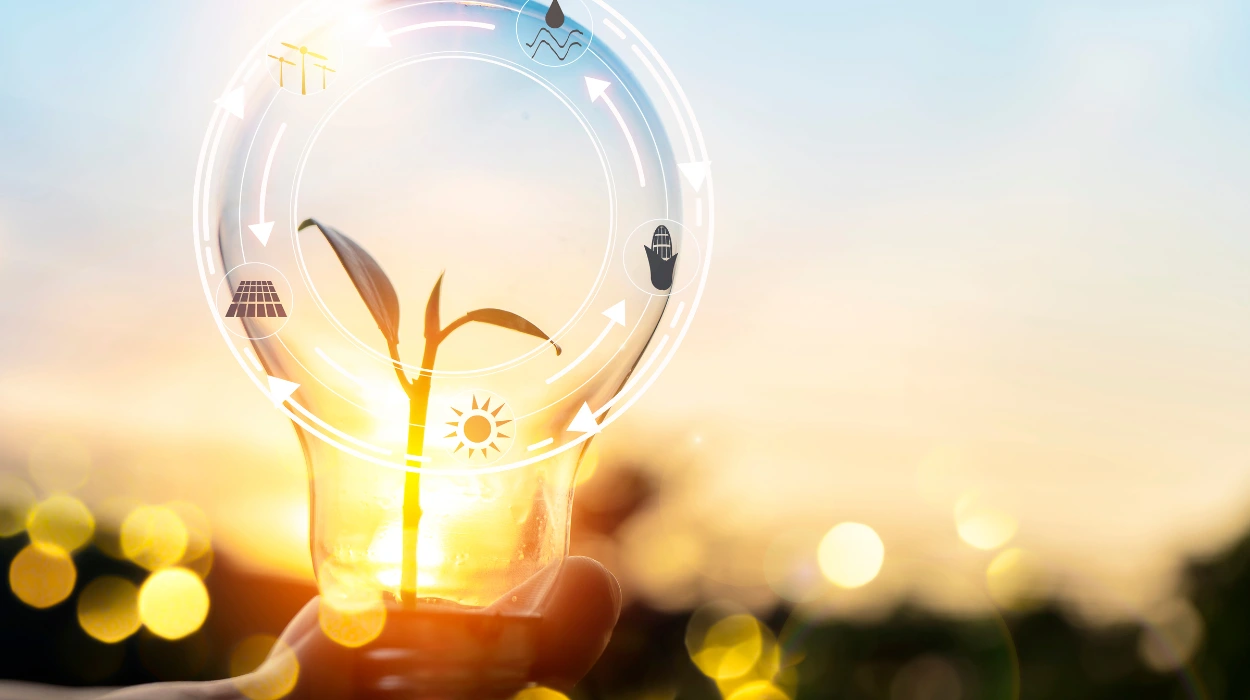
In today’s world, the need for continuous economic growth is increasing to meet the demands of expanding societies. However, this growth cannot be achieved at the expense of the environment or through the depletion of essential natural resources. Water, energy, soil, and forests are not infinite resources, and any excessive or unplanned exploitation may lead to environmental crises that affect both societies and economies. From this arises the major challenge facing governments and institutions: how can sustainable development and economic growth be achieved without harming the environment’s vital resources?
Balancing development and resource protection is not merely a slogan or a theoretical concept; it has become a practical necessity for every institution seeking long-term success. Continuous economic growth can only be achieved when it is aligned with clear strategies for environmental protection, waste reduction, and greater efficiency in resource use. This balance is a vital element of sustainability, as it ensures that economic projects and initiatives remain viable without causing environmental damage that could weaken an institution’s ability to operate or expose it to legal and financial risks.
The British Academy of Training and Development emphasizes that institutions that successfully integrate development with resource protection gain a significant competitive advantage. They can deliver balanced economic and social value while enhancing their reputation as responsible and sustainable organizations. Investing in institutional competencies, environmental knowledge, and modern technologies also strengthens institutions’ ability to face complex and constantly changing challenges, transforming environmental risks into opportunities for growth and innovation.
Sustainable development is the ability to achieve economic and social growth without harming the environment. It relies on long-term planning that balances the needs of present and future generations. Sustainable development is not just a slogan; it is a practical framework that ensures economic projects do not lead to resource depletion or cause environmental damage that would require costly remediation later.
In this context, institutions must integrate environmental considerations into all stages of planning and implementation, starting from the selection of resources and technologies, through environmental risk assessment, and extending to performance monitoring and continuous improvement. This approach transforms development into a responsible process that achieves growth without sacrificing the environment’s ability to regenerate.
Resource protection means preserving all natural resources used in production and development, including water, energy, soil, and forests, to ensure their sustainability for future generations. The depletion of these resources leads to direct negative impacts on the economy and society, such as water shortages, increased production costs, and the degradation of ecosystems on which humans depend.
Resource protection also includes the smart management of available resources, the application of innovative technologies to reduce waste and emissions, and the adoption of sustainable production practices. Institutions that place resource protection at the top of their priorities are better able to adapt to environmental changes and reduce legal and financial risks associated with environmental negligence.
Achieving a balance between development and resource protection is not a luxury but a strategic necessity. Establishing policies that preserve the environment while supporting economic growth:
Reduces potential economic and environmental risks.
Improves resource consumption efficiency and minimizes waste.
Enhances institutional competitiveness and attracts sustainable investments.
Strengthens corporate reputation and earns the trust of society and stakeholders.
This balance ensures that development is genuine and sustainable, rather than short-term or harmful to vital resources needed for the future.
This includes integrating environmental considerations into every stage of a project, from conducting environmental impact assessments to selecting environmentally friendly resources and technologies, and setting clear goals to reduce emissions and waste.
Environmental InnovationDeveloping environmentally friendly products and services, adopting renewable energy, and improving resource efficiency make it possible to achieve economic growth without depleting the environment.
Enhancing Institutional CompetenciesTraining teams to manage resources effectively and equipping them with the necessary skills and knowledge ensures the implementation of best environmental practices across all operations.
Partnerships and CollaborationExchanging expertise among institutions, the government sector, and civil society enables joint solutions and ensures the long-term sustainability of environmental initiatives.
Practical Examples of Achieving BalanceSome practical practices can be summarized as follows:
Water reuse: Treating used water and reusing it in industrial and agricultural processes.
Transition to clean energy: Using solar and wind energy to reduce carbon emissions.
Green building design: Reducing energy and water consumption through sustainable design.
Circular economy: Recycling waste and transforming it into reusable resources.
Continuous monitoring of environmental impact: Measuring environmental performance and continuously improving operations.
Effective leadership ensures the integration of development with resource protection by:
Establishing clear environmental policies.
Providing the resources and support needed to implement sustainable solutions.
Encouraging innovation and environmental initiatives.
Evaluating environmental performance and rewarding sustainable achievements.
Having responsible leadership makes resource protection part of the institution’s core strategy rather than a secondary activity.
Future ChallengesInstitutions face several challenges, including:
Conflicts of interest between economic growth and environmental protection.
A lack of specialized competencies and expertise.
Financial and resource constraints in implementing sustainable technologies.
Difficulty in continuously measuring and analyzing environmental impact accurately.
Addressing these challenges requires strategic planning, continuous training, and building an institutional culture that supports environmental responsibility.
The Future of Balancing Development and Resource ProtectionWith growing global attention to sustainability, digital technology and artificial intelligence will become essential tools for managing resources efficiently and achieving the required balance. The importance of partnerships among educational institutions, the industrial sector, and civil society will also increase to ensure knowledge exchange and the dissemination of best environmental practices.
Achieving this balance is a long-term strategic investment that ensures resource sustainability, community well-being, and the long-term continuity of institutions.