
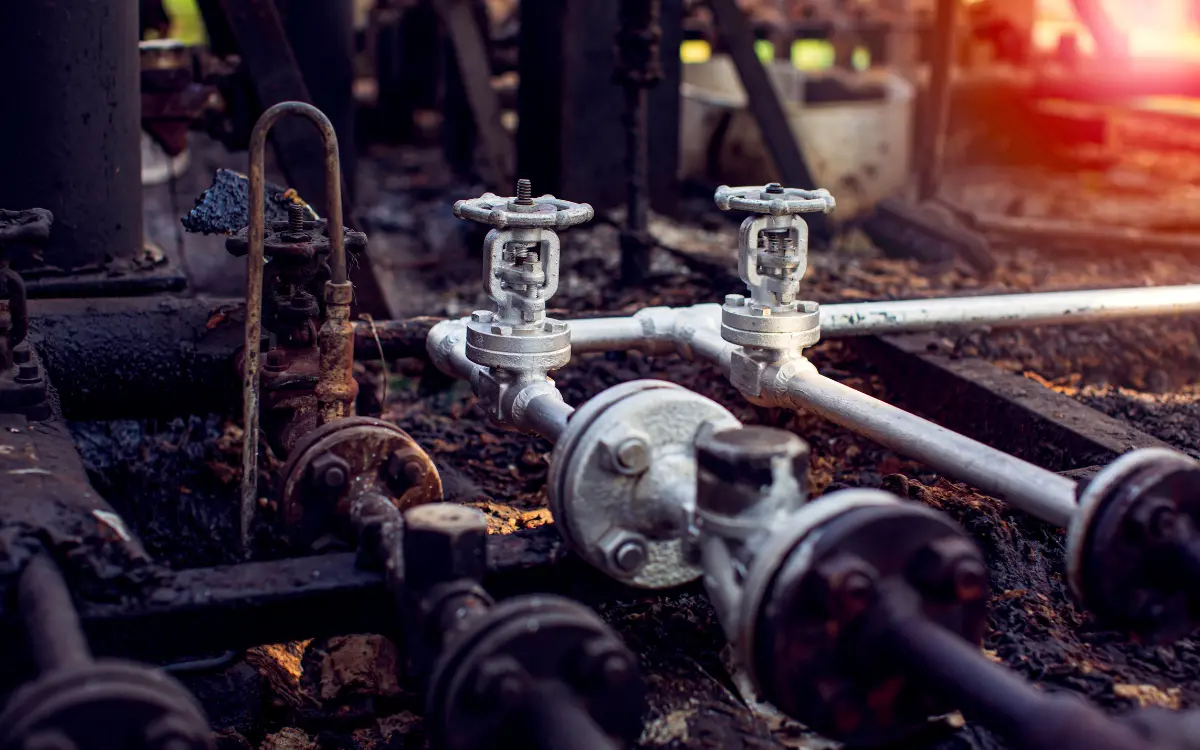
Corrosion is a major issue that is encountered in the oil and gas industry in pipelines as well as in equipment. Interaction of chemicals, gases and the environment tend to corrode metals, which presents the need for costly repairs, danger to mankind and pollutes the environment. Oil and gas training courses from the British Academy for Training and Development includes industry knowledge about corrosion, corrosion control, and technologies of the present era.
This article explores what corrosion means in the oil and gas industry, the types of corrosion that is experienced and corrosion control measures.
“In the oil and gas industry, corrosion is the process by which metal surfaces are eroded by a chemical attack from its surrounding environment.”
The associated factors that cause corrosion include high temperatures, pressures, the presence of solutions like water, gases such as carbon dioxide (CO₂), hydrogen sulphide (H₂S), oxygen etc. Corrosion deteriorates structures and can lead to the deterioration of a metal surface, its cracking or complete failure if not checked.
Corrosion control in the oil and gas industry is crucial for saving capital investment, protecting people and equipment, and avoiding harm to the environment. Methods and technologies exist, and are employed for controlling, preventing, and reducing corrosion.
Several types of corrosion are common to the oil and gas industry. Knowledge of these types enables the engineers, as well as managers, to apply the proper approaches to corrosion control.
This type of corrosion is very common in the oil industry, where the metal gets damaged or corroded uniformly all over the surface. While it contributes to material thinning, this effect is regular and thus it can be controlled by constant observation and intervention.
This form of corrosion results in the formation of small and localised pits, centred on the surface of the metal and rapidly grows to cause extensive damage. Pitting is particularly severe in pressurised equipment and pipelines because the failures can be sudden.
Happens when two dissimilar metals are connected in an environment containing an electrolyte in which one of them will corrode at a faster rate than the other. This sort of corrosion is typical for mixed metal installations.
This type of corrosion takes place in confined areas or spaces, like metal parts or under deposits formed on the metal surface. These areas contain corrosive materials that accelerate the degradation of metals.
SCC also predicts the existence of both tensile stress and corrosive environments, which cause the formation of cracks that can alter the mechanical properties of the material.
A type of corrosion especially associated with hydrogen sulphide containing environments. Hydrogen penetrates into the metal and makes it uneven and even cracks due to its presence.
Corrosion control systems and technologies in the oil and gas industry cover few methods and practices to pursue. Here are some key methods:
There are great probabilities of corrosion to be prevented through the use of selected materials such as stainless steel or materials with higher levels of corrosion resistance. Metal protection is also possible through the use of coatings or linings to give a surface strength where a metal is vulnerable to extreme conditions.
In this technique a tiny amount of electric current is passed over the metal surface so that it cannot come into contact with the corrosive agents. It is mostly used in pipelines and storage tanks.
These are the chemicals that are introduced into oil, gas or water with the aim of reducing corrosion or inhibiting it all together. Inhibitors are more useful in gas oil corrosion since they minimise the destructive compounds such as sulphur and others.
The regular checks and the application of corrosion monitoring tools help companies identify signs of corrosion and intervene to prevent it. Methods like ultrasonic testing and radiographic inspection are still quite common in today’s world.
Methods of preventing or reducing the access of moisture, controlling temperature, and excluding corrosive elements such as oxygen can drastically decrease the potential of corrosion of the system.
In conclusion,
Corrosion is still a challenge in today’s oil and gas industry as it poses a major threat to the industry and affects the safety and costs of the operations, along with the operational efficiency. Hence, the types of corrosion and measures including material selection, cathodic protection and use of corrosion inhibitors and monitoring can all be used effectively to reduce impairment of structures and other company assets due to corrosion. Preventing gas oil corrosion and corrosion in oil is very crucial to have long-term business success with the least effects on the environment.
1. What causes corrosion in oil and gas?
The major sources of corrosion in the oil and gas industry include water, carbon dioxide, hydrogen sulphide, oxygen and acids. These agents interact with metal substrates to reduce the lifespan of the metal.
2. What is the most common type of corrosion in the oil industry?
Uniform corrosion is the most conventional type of corrosion in the oil industry, where the metal-area corrodes evenly. Still, it is rather predictable and, nevertheless, presupposes constant controlling and adjustment. Although it is predictable, the process still needs constant supervision and management.
3. Is gas oil corrosive?
Yes, gas oil is corrosive, as it contains contaminants such as sulphur compounds which tend to produce H₂S which is hydrogen sulphide, a highly corrosive element or compound, particularly under high temperature.
4. How corrosive is oil?
The effect of oil depends on the nature of the oil, especially the presence of water content, salts, sulphur and acids. Sweet crude oil is relatively less corrosive than sour crude oil because it contains a higher amount of sulphur.